domingo, abril 12, 2026
Franklin Delano Roosevelt morreu há oitenta e um anos...
Postado por Fernando Martins às 08:10 0 comentários
Marcadores: FDR, Franklin Delano Roosevelt, Grande Depressão, II Grande Guerra, II Guerra Mundial, New Deal, Presidente dos EUA
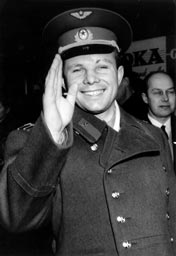
Yuri Gagarin tornou-se o primeiro cosmonauta há sessenta e cinco anos ...!
| A Terra é azul. Como é maravilhosa. Ela é incrível! | - Iuri Gagarin |
Esteve em órbita durante 108 minutos, a uma altura de 315 Km, num voo totalmente automatizado, com uma velocidade aproximada de 28.000 km/h. Pela proeza, recebeu a medalha da Ordem de Lenine.
A Viagem
A nave espacial entrou em órbita, e o foguete se separou, a gravidade deixou de se sentir.. No início, a sensação era de algo incomum, mas eu adaptei-me logo ... Eu tive em contacto com a Terra com diferentes canais: por telefone e telégrafo. | - Iuri Gagarin |
| “ | A Terra é azul | ” |
| “ | Olhei para todos os lados, mas não vi Deus. | ” |
A União Soviética negou esse facto durante anos, com medo de o voo não ser reconhecido pelas entidades internacionais, já que o piloto não acompanhou a nave até ao final.
in Wikipédia
Postado por Fernando Martins às 06:50 0 comentários
Marcadores: astronauta, cosmonauta, URSS, Vostok 1, Yuri Gagarin
Vince Gill - 69 anos
Postado por Fernando Martins às 06:09 0 comentários
Marcadores: blue-eyed soul, bluegrass, country, Country pop, I Still Believe In You, música, Southern Rock, Vince Gill
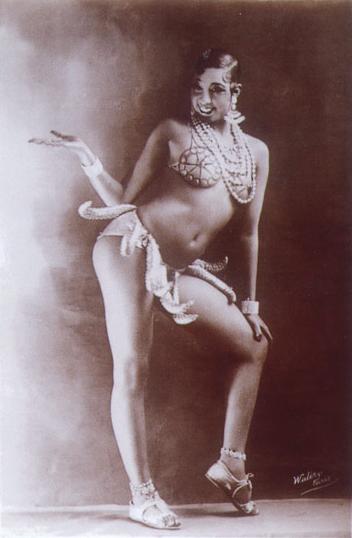
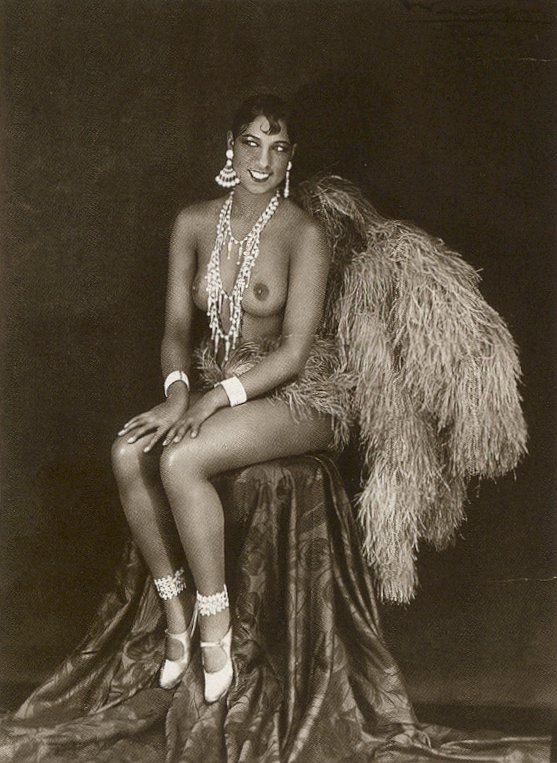
Hoje é dia de recordar Josephine Baker...
Postado por Pedro Luna às 05:10 0 comentários
Marcadores: afro-americanos, Bye bye blackbird, dança, França, Josephine Baker, música, resistência, Teatro de Revista, USA
Música adequada à data...
Postado por Pedro Luna às 04:30 0 comentários
Marcadores: alternative Rock, folk rock, garage rock, jangle pop, Murmur, música, Post-punk, R.E.M., Radio Free Europe
Música adequada à data...
Postado por Pedro Luna às 04:08 0 comentários
Marcadores: baixo, Coldplay, Guy Berryman, Man In The Moon, música, Rock alternativo
Música de aniversariante de hoje...
Postado por Pedro Luna às 03:09 0 comentários
Marcadores: Brendon Urie, But It's Better If You Do, música, Panic! at the Disco, pop, Rock alternativo
Pietro Nardini nasceu há 304 anos
Pietro Nardini (Fibiana, 12 de abril de 1722 - Florença, 7 de maio de 1793) foi um compositor e violinista italiano.
Nardini nasceu em Livorno e estudou música em Livorno, tornando-se mais tarde aluno de Giuseppe Tartini. Ele mudou-se para a Alemanha, onde se juntou à capela da corte em Stuttgart, tornando-se regente em 1762. No entanto, ele abandonou suas funções lá em 1765 para se tornar Kapellmeister, em 1770, para o Grão-Duque da Toscana em Florença.
Nardini é mencionada nas Observações e reflexões feitas no curso de uma viagem pela França, Itália e Alemanha
(1789), do escritor inglês Hester Lynch Piozzi, como tocando um solo
num concerto que a Senhora Piozzi e o seu marido, Gabriele Piozzi, deram
em
Florença em julho de 1785.
Como amigo de Leopold Mozart, ele testemunhou a chegada de Wolfgang Amadeus Mozart na sua primeira visita à Itália e suas tentativas de encontrar uma posição sustentável em 1770-1771. Também conheceu o compositor boémio Václav Pichl, Kapellmeister do arquiduque Ferdinand d'Este, governador austríaco da Lombardia. Foi professor de Bartolomeo Campagnoli, Giovanni Francesco Giuliani e provavelmente também de Gaetano Brunetti. Morreu em Florença, a 7 de maio de 1793, aos 71 anos.
in Wikipédia
Postado por Fernando Martins às 03:04 0 comentários
Marcadores: Itália, música, Pietro Nardini, violino
Robert Delaunay nasceu há cento e quarenta e um anos...
Robert Delaunay est un peintre français né le à Paris et mort le à Montpellier. Avec sa femme Sonia Delaunay et quelques autres, il est le fondateur et le principal artisan du mouvement orphiste, branche du cubisme et important mouvement d'avant-garde du début du XXe siècle. Ses travaux sur la couleur prennent pour origine plusieurs théories de la loi du contraste simultané des couleurs, formulées par Michel-Eugène Chevreul. Par un travail concentré sur l'agencement des couleurs sur la toile, il cherche l'harmonie picturale.
Delaunay fait partie d'une génération d'avant-garde, particulièrement prolifique sur le plan artistique entre 1912 et 1914. Il est très lié (en correspondance, en art, voire en amitié) avec les poètes Guillaume Apollinaire et Blaise Cendrars, les peintres russes Vassily Kandinsky et Michel Larionov, les peintres allemands August Macke ou Franz Marc, le peintre slovaque Geza Szobel.
Après la guerre, il se lie d'amitié avec les artistes du mouvement surréaliste, dont il réalise plusieurs portraits, sans pour autant adopter leurs points de vue et leurs visions artistiques. Il aura notamment une amitié forte et durable avec le poète Tristan Tzara.
Son nom est également associé à la tour Eiffel, dont il a vu la construction alors qu'il avait quatre ans, et qu'il a peinte de nombreuses fois dans sa carrière, en utilisant des méthodes différentes, d'abord néo-impressionniste puis cubiste, et ensuite avec sa méthode simultanéiste.

L'homme à la tulipe, portrait de Jean Metzinger, 1906

Femme portugaise, 1915
Postado por Fernando Martins às 01:41 0 comentários
Marcadores: França, orfismo, Paris, pintura, Robert Delaunay
Josephine Baker morreu há cinquenta e um anos...
Josephine Baker, nome artístico de Freda Josephine McDonald, (Saint Louis, 3 de junho de 1906 - Paris, 12 de abril de 1975) foi uma célebre cantora e dançarina norte-americana, naturalizada francesa em 1937, e conhecida pelas alcunhas de Vénus Negra, Pérola Negra e ainda Deusa Crioula.
Postado por Fernando Martins às 00:51 0 comentários
Marcadores: afro-americanos, dança, França, J’ai deux amours, Josephine Baker, música, resistência, Teatro de Revista, USA
Guy Berryman, o baixo dos Coldplay, celebra hoje 48 anos
Postado por Fernando Martins às 00:48 0 comentários
Marcadores: A Sky Full Of Stars, baixo, Coldplay, Guy Berryman, música, Rock alternativo
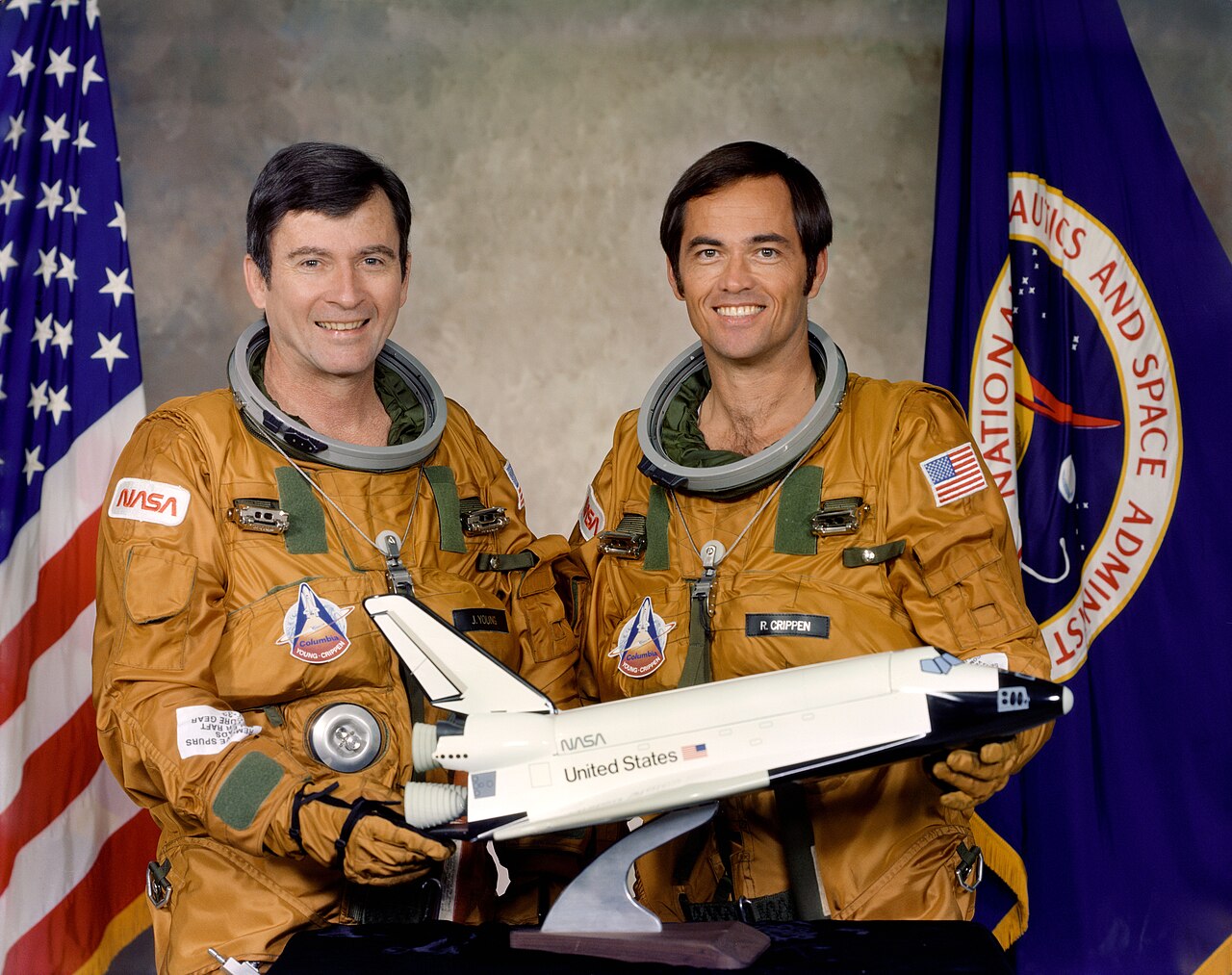
O primeiro voo de um vaivém espacial foi há quarenta e cinco anos anos...!
STS-1 (Space Transportation System-1) was the first orbital spaceflight of NASA's Space Shuttle program. The first orbiter, Columbia, launched on April 12, 1981, and returned on April 14, 1981, 54.5 hours later, having orbited the Earth 37 times. Columbia carried a crew of two—commander John W. Young and pilot Robert L. Crippen. It was the first American crewed space flight since the Apollo–Soyuz Test Project (ASTP) in 1975. STS-1 was also the maiden test flight of a new American spacecraft to carry a crew, though it was preceded by atmospheric testing (ALT) of the orbiter and ground testing of the Space Shuttle system.
The launch occurred on the 20th anniversary of Vostok 1, the first human spaceflight, performed by Yuri Gagarin for the USSR. This was a coincidence rather than a celebration of the anniversary; a technical problem had prevented STS-1 from launching two days earlier, as was planned.
| Position | Astronaut | |
|---|---|---|
| Commander | John Young Fifth spaceflight | |
| Pilot | Robert Crippen First spaceflight | |
Commander John Young and pilot Robert Crippen were selected as the STS-1 crew in early 1978. Young stated that as the Chief of the Astronaut Office he recommended himself to command the mission. Young, with four previous missions, was the most experienced astronaut in NASA at the time and was also the only member of NASA Astronaut Group 2 still in service. He flew twice on Project Gemini and twice on the Apollo program, walked on the Moon in 1972 as the Commander of Apollo 16, and became Chief of the Astronaut Office in 1974. Crippen, part of NASA Astronaut Group 7 after the cancellation of the Manned Orbiting Laboratory (MOL), was a rookie and would become the first of his astronaut group to fly in space. Prior to his selection on STS-1, Crippen participated in the Skylab Medical Experiment Altitude Test (SMEAT) and also served as a capsule communicator (capcom) for all three Skylab missions and the Apollo-Soyuz Test Project (ASTP).
Columbia carried Extravehicular Mobility Units (EMU) for both Young and Crippen in the event of an emergency spacewalk. If such an event occurred, Crippen would go outside the orbiter, with Young standing by in case Crippen required assistance.
As of April 1981 Young and Crippen trained the longest for a space mission before flying in NASA history. If STS-1 had launched in March 1979 as originally scheduled "We'd have been launched about halftrained", Young said. As no one had flown the shuttle before, they helped design the craft's controls, including 2,214 switches and displays in the cockpit - about three times as many on the Apollo command module - and many contingency procedures. STS-1 carried 22 manuals, each three inches thick and together weighing 29 kg (64 lb); the procedure for an electronics failure from a cooling system malfunction had 255 steps.
Mission parameters
- Mass:
- Orbiter liftoff: 99,453 kg (219,256 lb)
- Orbiter landing: 88,662 kg (195,466 lb)
- DFI payload: 4,909 kg (10,822 lb)
- Perigee: 246 km (153 mi)
- Apogee: 274 km (170 mi)
- Inclination: 40.30°
- Period: 89.88 minutes
Crew seat assignments
| Seat | Launch | Landing | Seats 1–4 are on the flight deck. Seats 5–7 are on the mid-deck. |
|---|---|---|---|
| 1 | Young | ||
| 2 | Crippen | ||
| 3 | Unused | ||
| 4 | Unused | ||
| 5 | Unused | ||
| 6 | Unused | ||
| 7 | Unused | ||
During the original planning stages for the early Space Shuttle missions, NASA management under the Carter Administration felt a need to undertake initial tests of the system prior to the first orbital flight. To that end, Vice President Walter F. Mondale as chairman of the National Space Council suggested a suborbital flight landing at the emergency landing site at Dakar, Senegal. NASA further suggested that STS-1, instead of being an orbital flight, be used to test the Return To Launch Site (RTLS) abort scenario. This involved an abort being called in the first few moments after launch, and using its main engines, once the SRBs had been jettisoned, to power it back to the launch site. This scenario, while potentially necessary in the event of an early abort being called, was seen as being extremely dangerous. Young overruled both proposals, and STS-1 went ahead as the first orbital mission. The NASA managers were swayed by Young questioning the need for the test, and the weight of his opinion was especially strong as he was someone who not only had been to the Moon twice, but had walked on it. He would fly the Space Shuttle again on the STS-9 mission, a ten-day flight in 1983.
Let's not practice Russian roulette, because you may have a loaded gun there.
— John W. Young on testing the Return To Launch Site Abort
| Attempt | Planned | Result | Turnaround | Reason | Decision point | Notes |
|---|---|---|---|---|---|---|
| 1 | 10 Apr
1981, 7:00:00 am |
Scrubbed | − | Technical | (T−18 minutes) | Timing problem in one of Columbia's general purpose IBM System/4 Pi computers. A software patch was installed to correct. |
| 2 | 12 Apr
1981 7:00:04 |
Success | 2 days
0 hours 0 minutes |
Not only was this the first launch of the Space Shuttle, but it marked the first time that solid-fuel rockets were used for a NASA crewed launch (although previous systems had used solid-fuel motors for their escape towers or retro rockets). STS-1 was also the first U.S. crewed space vehicle launched without an uncrewed powered test flight. The STS-1 orbiter, Columbia, also holds the record for the amount of time spent in the Orbiter Processing Facility (OPF) before launch – 610 days, the time needed for the replacement of many of its heat shield tiles.
The NASA mission objective for the maiden flight was to accomplish a safe ascent into orbit and return to Earth for a safe landing of Orbiter and crew. The only payload carried on the mission was a Development Flight Instrumentation (DFI) package, which contained sensors and measuring devices to record the orbiter's performance and the stresses that occurred during launch, ascent, orbital flight, descent and landing. All 113 flight test objectives were accomplished, and the orbiter's spaceworthiness was verified.
During the final T−9 minute holding period, Launch Director George Page read a message of good wishes to the crew from President Ronald Reagan, ending with, "John, we can't do more from the launch team than say, we wish you an awful lot of luck. We are with you one thousand percent and we are awful proud to have been a part of it. Good luck gentlemen."
Ignition of the three RS-25 main engines was sensed as a sharp increase in noise. The stack rocked "downwards" (towards the crew's feet), then back up to the vertical, at which point both Solid Rocket Boosters (SRBs) ignited. Crippen likened lift-off to a "steam catapult shot" (such as when an aircraft is launched from an aircraft carrier). The stack's combined northwards translation and climb above the launch tower's lightning rod were readily apparent to Young. After clearing the tower the stack began a right roll (until the +Z axis or vertical fin pointed) to a launch azimuth of 067° True (in order to achieve an orbital inclination of 40.30°), and pitched to a "heads down" attitude (to reduce loading on the wings). Simultaneously control was passed from the launch team in Florida to Flight Director Neil Hutchinson's Silver team in Flight Control Room 1 (FCR 1) in Texas with astronaut Dan Brandenstein as their CAPCOM.
Columbia's main engines were throttled down to 65% thrust to transit the region of Max Q, the point during ascent when the shuttle undergoes maximum aerodynamic stress. This occurred 56 seconds into the flight at Mach 1.06.[10] The wind corrected value was 29 kPa (4.2 psi) (predicted 28 kPa (4.1 psi), limit 30 kPa (4.4 psi)). The two SRBs performed better than expected causing a lofted trajectory, and were jettisoned after burnout at 2 minutes and 12 seconds (at 53,000 m (174,000 ft) altitude, 2,800 m (9,200 ft) higher than planned). After 8 minutes and 34 seconds Mission Elapsed Time (MET), the main engines were shut down (MECO, at altitude 118,000 m (387,000 ft)) and the external tank was jettisoned 18 seconds later to eventually break up and impact in the Indian Ocean. Two twin-engined Orbital Maneuvering System (OMS) engine burns of 86 seconds duration initiated at 10 minutes and 34 seconds MET and 75 seconds duration at 44 minutes 2 seconds MET inserted Columbia into a 246 × 248 km (153 × 154 mi) orbit. This subtle deviation from the original plan of 240 km (150 mi) circular went largely unnoticed. In fact, it adjusted the spacecraft's orbital period to take account of the April 10, 1981, scrub, so that attempts could still be made to use KH-11 reconnaissance satellites to image Columbia on orbit. Overall Young commented that there was a lot less vibration and noise during launch than they had expected. However, the sensations accompanying the first firing of the large Reaction Control System (RCS) jets surprised the crew. Crippen commented "it's like a big cannon just fired ... you don't like them the first time you hear them". Young reported that "the entire cabin vibrates ... it felt like the nose was being bent".
Once on-orbit both crew members safed their ejection seats and unstrapped. The next critical event was payload bay door opening. This was essential to allow heat rejection from Columbia's systems via the doors' space radiators. Failure to open these by the end of the second orbit would have resulted in a return to Earth at the end of the fifth orbit, before the limited capacity of the flash evaporator cooling system was exceeded. As they opened the doors the crew noticed that they had sustained damage to thermal protection system (TPS) tiles on the OMS pods. This was televised to the ground. Shortly afterwards Young, then Crippen doffed their emergency ejection suits.
The majority of the crew's approximately 53 hours in low Earth orbit was spent conducting systems tests. Despite the scheduling impact of efforts to image Columbia's TPS by utilizing external assets, these were all accomplished. They included: Crew Optical Alignment Sight (COAS) calibration, star tracker performance, Inertial Measurement Unit (IMU) performance, manual and automatic RCS testing, radiation measurement, propellant crossfeeding, hydraulics functioning, fuel cell purging, and photography. The OMS-3 and OMS-4 burns at 006:20:46 and 007:05:32 MET respectively raised this orbit to 273.9 × 274.1 km (170.2 × 170.3 mi) (compared to a planned 280 km (174 mi) circular). These two firings were single engined utilizing the crossfeed system.[13] The crew reported a cold first night on board despite acceptable temperature indications. They found the second night comfortable after settings were adjusted.
During the second day of the mission, the astronauts received a phone call from Vice President George H. W. Bush. President Ronald Reagan had originally intended to visit the Mission Control Center during the mission, but at the time was still recovering from an assassination attempt which had taken place two weeks before the launch (Reagan had returned home to the White House only the day prior to the launch).
The crew awoke from their second sleep period earlier than planned. Preparations for return to Earth began with breakfast. Stowing of cabin items, flight control system checkout, data processing system reconfigurations, and then ejection suit donning followed. In Houston, the Crimson team headed by their Flight Director Don Puddy came on duty in FCR 1 for the mission's final shift. His CAPCOM was astronaut Joseph P. Allen with Frederick Hauck assisting. Payload bay door closing was a critical milestone to ensure vehicle structural and thermal integrity for re-entry. If power closing had failed, Crippen was trained to conduct a one-man extravehicular activity (EVA) to manually winch them closed. With cabin switch positions verified, the crew strapped into their ejection seats. Meanwhile, Johnson Space Center (JSC) pilots Charlie Hayes and Ted Mendenhall were airborne over California's Edwards Air Force Base area in a Shuttle Training Aircraft (STA) performing a final check of landing weather conditions.
Auxiliary Power Units (APUs) 2 and 3 were started (to provide flight control hydraulic pressure). The 160-second twin-engine OMS de-orbit burn took place during the 36th orbit over the southern Indian Ocean and changed the orbital parameters from 270 × 274 km (168 × 170 mi) to 270 × 0 km (168 × 0 mi). This ensured atmospheric capture of the spacecraft close enough to the planned landing site to have sufficient energy for a controlled glide landing, but not so close that energy would have to be dissipated at a rate exceeding its structural capability. Young then slowly pitched Columbia up to the wings level nose high entry attitude. Both crew members armed their ejection seats during this pitch around. Nearly half an hour later APU 1 was started as planned. Shortly afterwards, Columbia entered an approximately 21-minute long communications blackout. This was due to a combination of ionization (16 minutes) and lack of ground station coverage between Guam and Buckhorn Tracking Station at Dryden Flight Research Facility. Entry Interface (EI) was reached over the eastern Pacific Ocean 8,110 km (5,040 mi) from the landing site at a speed of around 28,240 km/h (17,550 mph). EI is merely an arbitrarily defined geodetic altitude of 120,000 m (390,000 ft) employed by NASA for the purposes of trajectory computations and mission planning. Above this altitude, the spacecraft is considered to be outside the "sensable atmosphere".
Most of this first orbiter entry was flown automatically. An initial angle of attack of 40° had to be maintained until through the most severe aerodynamic heating after which it was gradually reduced. At about 100,000 m (330,000 ft) altitude a light pink air glow caused by entry heating became visible, and both crew members lowered their visors. Columbia had to maneuver 583 km (362 mi) "cross range" of its orbital ground track to reach the planned landing site during the entry. Consequently, a roll into a right bank was flown when the air density had increased sufficiently to raise dynamic pressure to 570 Pa (0.083 psi) (with speed still in excess of Mach 24 and approximately 78,000 m (256,000 ft) altitude). Automatic roll reversals to control energy dissipation rate and cross range steering were performed at around Mach 18.5 and Mach 9.8. The crew clearly observed the coast of California as Columbia crossed it near Big Sur at Mach 7 and 41,000 m (135,000 ft). Both the Mach 4.8 and Mach 2.8 roll reversals were automatically initiated and manually completed by John Young. The last RCS jet firing took place at an altitude of 17,000 m (56,000 ft) - 4,300 m (14,100 ft) lower than desired (due to a predicted risk of combustion chamber explosion).
Young again took manual control for the remainder of the flight as they went subsonic approaching the Heading Alignment Circle (HAC). A wide left turn was flown to line up with lake bed runway 23, whilst T-38 "Chase 1", crewed by astronauts Jon McBride and "Pinky" Nelson joined formation. Main gear touch down occurred on runway 23 at Edwards Air Force Base, at 339 km/h (211 mph) equivalent airspeed, slightly slower and around 800 m (2,600 ft) further down the runway than planned. This was the result of a combination of better than predicted Orbiter lift-to-drag ratios and tail wind. Touch down time was 18:21 UTC on April 14, 1981. As they rolled to a stop, Young remarked over the radio, "This is the world's greatest all electric flying machine. I'll tell you that. That was super!"
Columbia was returned to Kennedy Space Center from California on April 28, 1981, atop the Shuttle Carrier Aircraft. The 36-orbit, 1,729,348 km (1,074,567 mi) flight lasted 2 days, 6 hours, 20 minutes and 53 seconds.
Postado por Fernando Martins às 00:45 0 comentários
Marcadores: astronautas, astronáutica, astronomia, Columbia, NASA, vaivém espacial
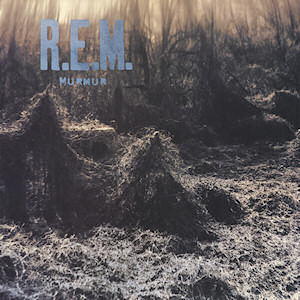
Os R.E.M. lançaram Murmur, o álbum de estreia, há 43 anos
Murmur is the debut studio album by American alternative rock band R.E.M., released on April 12, 1983, by I.R.S. Records. The album was recorded in the winter of 1983 at Reflection Studios in Charlotte, North Carolina, with musicians Don Dixon and Mitch Easter serving as producers. Murmur drew critical acclaim upon its release for its unconventional sound, defined by lead singer Michael Stipe's cryptic lyrics, guitarist Peter Buck's jangly playing, and bassist Mike Mills's melodic basslines. In 2003, the album was ranked number 197 in Rolling Stone magazine's list of the "500 Greatest Albums of All Time". It retained the position in the 2012 list and was raised to number 165 in the 2020 revision.
in Wikipédia
Postado por Fernando Martins às 00:43 0 comentários
Marcadores: alternative Rock, folk rock, garage rock, jangle pop, Murmur, música, Post-punk, R.E.M., Talk About the Passion
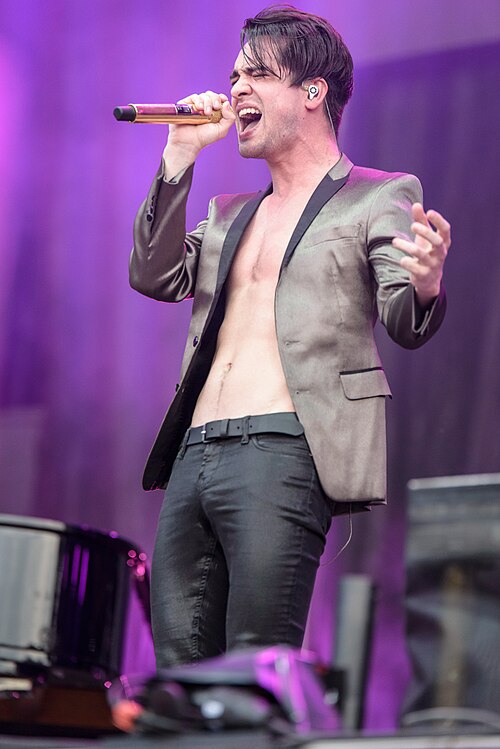
Brendon Urie, dos Panic! at the Disco, comemora hoje 39 anos
Brendon Boyd Urie (St. George, 12 de abril de 1987), também conhecido como Brendon Urie, é um cantor e compositor norte-americano. Ele é um dos fundadores, vocalista e atualmente o único membro da formação original da banda Panic! At the Disco.
Postado por Fernando Martins às 00:39 0 comentários
Marcadores: Brendon Urie, High Hopes, música, Panic! at the Disco, pop, Rock alternativo
A Disneyland de Paris faz hoje trinta e quatro anos
A Disneyland Paris, originalmente Euro Disney Resort, é um resort de entretenimento em Marne-la-Vallée, uma cidade planeada localizada 32 km a leste do centro de Paris, sendo a atração mais visitada em toda a França e Europa. A sua proprietária e administradora é a Euro Disney S.C.A. uma empresa de capital aberto na qual a The Walt Disney Company possui uma participação minoritária. O resort cobre uma área de 19 km² e compreende dois parques temáticos, alguns hotéis resort, um complexo de compras, alimentação e entretenimento e um campo de golfe, além de alguns locais de entretenimento. O Disneyland Park é o parque temático original do complexo e foi aberto com o resort em 12 de abril de 1992. Um segundo parque temático, o Walt Disney Studios Park, foi aberto em 2002. O parque é o segundo mais visitado da Disney em número de visitantes, com 15,6 milhões de pessoas em 2013, colocando-o entre a Disneyland de Anaheim na Califórnia e o Walt Disney World na Flórida, Estados Unidos.
O resort é o segundo parque da Disney a abrir fora dos Estados Unidos, após o Tokyo Disney Resort, e o primeiro a ser operado pela Disney (através da Euro Disney S.C.A.). O resort foi projetado especificamente para seguir o modelo estabelecido pelo Walt Disney World na Flórida.
Postado por Fernando Martins às 00:34 0 comentários
Marcadores: Disney, Disneyland Paris, EuroDisney, França, Paris
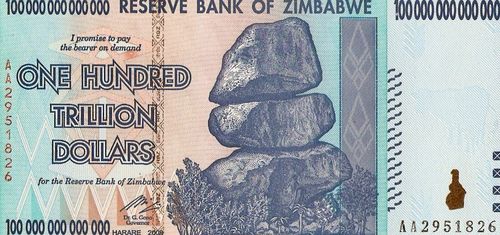
Um ditador acabou com o fantástico dólar zimbabuano há dezassete anos...
Como uma das moedas mais desvalorizadas do mundo, devido ao colapso da economia do país, em julho de 2007, foi lançada a nota de 200 mil dólares zimbabueanos, que, apesar do elevado valor de face, era capaz de comprar pouco mais do que um quilo de açúcar. No mercado paralelo, a moeda, aquando do seu lançamento, era cotada a um dólar americano. Menos de um ano depois foi necessário o lançamento de uma moeda com valor de face de 500 milhões.
Em janeiro de 2009, foram emitidas notas da família "trillion dollar", que já eram impressas com valores nominais de 10, 20, 50 e 100 triliões de dólares zimbabueanos.
Esta moeda sofreu duas reformas monetárias, sendo que na primeira houve o corte de três zeros e na segunda, ocorrida em agosto de 2008, foi efetuado o corte de dez zeros, medida insuficiente para o controle da hiperinflação, que estava a um nível de descontrole tão alto a ponto de superar o fenómeno hiperinflacionário ocorrido na Hungria logo após a II Guerra Mundial.
O dólar zimbabueano foi suspenso oficialmente pelo governo em 2009, devido à hiperinflação, sendo substituído oficialmente pelo dólar dos Estados Unidos (US$). Contudo, usualmente são adotados o rand sul-africano (R), o pula do Botswana (P), a libra esterlina (£) e o euro (€).
Oficialmente o dólar zimbabueano foi desmonetizado a 30 de setembro de
2015, logo após uma conversão em série de todo papel-moeda disponível em
circulação. Através de uma taxa fixa, as notas eram trocadas por
dólares americanos, na proporção de 35 quatrilhões por um dólar
americano, ou 175 quatrilhões por cinco dólares americanos.
Postado por Fernando Martins às 00:17 0 comentários
Marcadores: Dólar do Zimbabwe, dólar zimbabueano, hiperinflação, Robert Mugabe, Zimbabué