sexta-feira, abril 17, 2026
A Apollo XIII conseguiu voltar à Terra há 56 anos...
Postado por Fernando Martins às 00:56 0 comentários
Marcadores: acidente, Apollo, Apollo XIII, astronautas
segunda-feira, abril 13, 2026
A Apollo XIII teve um problema há 56 anos...
| Estatísticas da missão | |
|---|---|
| Módulo de comando | Odissey |
| Módulo lunar | Aquarius |
| Número de tripulantes | 3 |
| Lançamento | 11 de abril de 1970 Cabo Kennedy |
| Alunagem | cancelada |
| Aterragem | 17 de abril de 1970 |
| Duração | 5 d 22 h 54 m 41 s |
| Imagem da tripulação | |
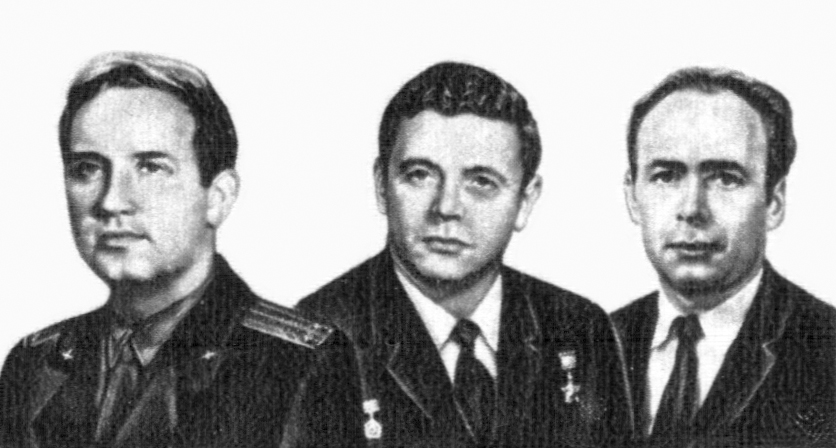
Da esquerda para a direita: Lovell, Swigert e Haise |
“Houston, temos um problema”
Sobrevivência
A questão toda da sobrevivência imediata estava agora ligada a um pequeno detalhe prosaico: como ligar os filtros de limpeza do dióxido de carbono exalado pelos astronautas dentro do Módulo Lunar, já que o bocal destes filtros era redondo – pois o encaixe do Módulo de Comando era assim – e o encaixe no Aquarius era quadrado. Evidentemente, esse modo seria uma improvisação e um quebra-cabeça para os cientistas no controle da missão e ela foi feita através de uma engenhosa combinação de tubos, papelão, sacos plásticos de carga e filtros de metal do Módulo de Comando, todos presos juntos por uma boa quantidade de fita isolante cinza. Como era usual sempre que a equipe da Apollo tinha que improvisar, engenheiros e outros astronautas no solo se ocuparam inventando soluções para o problema e testando os resultados. Um dia e meio após o acidente, as equipes do solo haviam desenhado e construído um dispositivo de filtragem que funcionou e eles passaram as instruções por rádio para a tripulação, cuidadosamente guiando seus passos durante cerca de uma hora.
Regresso
Quando chegou o momento da ignição, e quando o mundo inteiro aguardava com a respiração suspensa, o motor ligou perfeitamente e os colocou no caminho de volta. Quando a odisseia terminou, eles tinham feito um trabalho soberbo, voltando para a Terra com 20% da força do ML e 10% de água restantes. Lovell perdeu cinco quilos de peso e estavam todos cansados, famintos, molhados, desidratados e com frio quando aterraram. Por causa da desidratação e outros fatores, Fred Haise desenvolveu uma infeção de próstata, uma febre de 40 graus e esteve seriamente doente por duas ou três semanas após o retorno, mas tudo isso foi de importância secundária, porque eles tinham voltado vivos.
Postado por Fernando Martins às 00:56 0 comentários
Marcadores: acidente, Apollo, Apollo XIII, astronautas, astronomia, Lua, NASA
domingo, abril 12, 2026
O primeiro voo de um vaivém espacial foi há quarenta e cinco anos anos...!
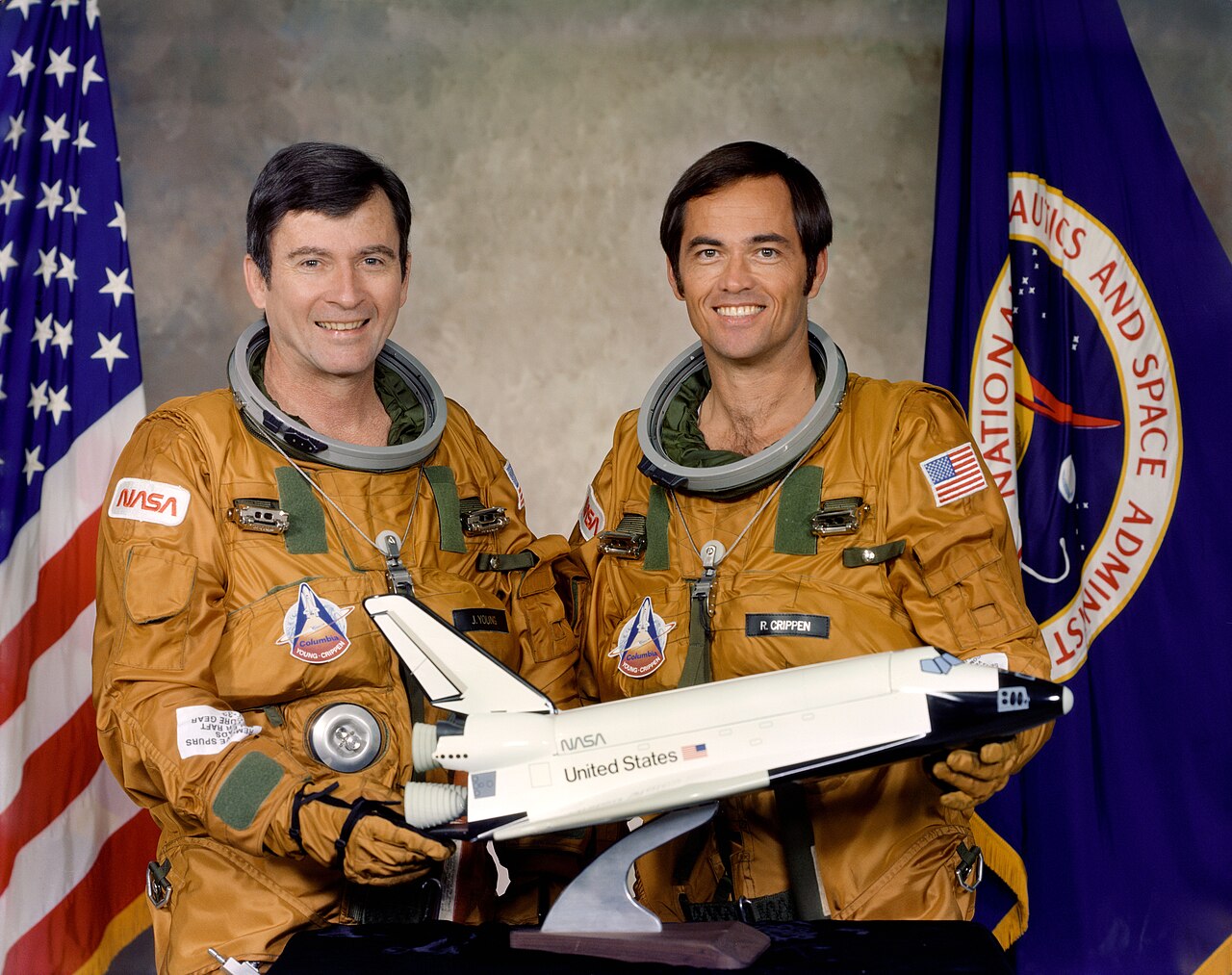
STS-1 (Space Transportation System-1) was the first orbital spaceflight of NASA's Space Shuttle program. The first orbiter, Columbia, launched on April 12, 1981, and returned on April 14, 1981, 54.5 hours later, having orbited the Earth 37 times. Columbia carried a crew of two—commander John W. Young and pilot Robert L. Crippen. It was the first American crewed space flight since the Apollo–Soyuz Test Project (ASTP) in 1975. STS-1 was also the maiden test flight of a new American spacecraft to carry a crew, though it was preceded by atmospheric testing (ALT) of the orbiter and ground testing of the Space Shuttle system.
The launch occurred on the 20th anniversary of Vostok 1, the first human spaceflight, performed by Yuri Gagarin for the USSR. This was a coincidence rather than a celebration of the anniversary; a technical problem had prevented STS-1 from launching two days earlier, as was planned.
| Position | Astronaut | |
|---|---|---|
| Commander | John Young Fifth spaceflight | |
| Pilot | Robert Crippen First spaceflight | |
Commander John Young and pilot Robert Crippen were selected as the STS-1 crew in early 1978. Young stated that as the Chief of the Astronaut Office he recommended himself to command the mission. Young, with four previous missions, was the most experienced astronaut in NASA at the time and was also the only member of NASA Astronaut Group 2 still in service. He flew twice on Project Gemini and twice on the Apollo program, walked on the Moon in 1972 as the Commander of Apollo 16, and became Chief of the Astronaut Office in 1974. Crippen, part of NASA Astronaut Group 7 after the cancellation of the Manned Orbiting Laboratory (MOL), was a rookie and would become the first of his astronaut group to fly in space. Prior to his selection on STS-1, Crippen participated in the Skylab Medical Experiment Altitude Test (SMEAT) and also served as a capsule communicator (capcom) for all three Skylab missions and the Apollo-Soyuz Test Project (ASTP).
Columbia carried Extravehicular Mobility Units (EMU) for both Young and Crippen in the event of an emergency spacewalk. If such an event occurred, Crippen would go outside the orbiter, with Young standing by in case Crippen required assistance.
As of April 1981 Young and Crippen trained the longest for a space mission before flying in NASA history. If STS-1 had launched in March 1979 as originally scheduled "We'd have been launched about halftrained", Young said. As no one had flown the shuttle before, they helped design the craft's controls, including 2,214 switches and displays in the cockpit - about three times as many on the Apollo command module - and many contingency procedures. STS-1 carried 22 manuals, each three inches thick and together weighing 29 kg (64 lb); the procedure for an electronics failure from a cooling system malfunction had 255 steps.
Mission parameters
- Mass:
- Orbiter liftoff: 99,453 kg (219,256 lb)
- Orbiter landing: 88,662 kg (195,466 lb)
- DFI payload: 4,909 kg (10,822 lb)
- Perigee: 246 km (153 mi)
- Apogee: 274 km (170 mi)
- Inclination: 40.30°
- Period: 89.88 minutes
Crew seat assignments
| Seat | Launch | Landing | Seats 1–4 are on the flight deck. Seats 5–7 are on the mid-deck. |
|---|---|---|---|
| 1 | Young | ||
| 2 | Crippen | ||
| 3 | Unused | ||
| 4 | Unused | ||
| 5 | Unused | ||
| 6 | Unused | ||
| 7 | Unused | ||
During the original planning stages for the early Space Shuttle missions, NASA management under the Carter Administration felt a need to undertake initial tests of the system prior to the first orbital flight. To that end, Vice President Walter F. Mondale as chairman of the National Space Council suggested a suborbital flight landing at the emergency landing site at Dakar, Senegal. NASA further suggested that STS-1, instead of being an orbital flight, be used to test the Return To Launch Site (RTLS) abort scenario. This involved an abort being called in the first few moments after launch, and using its main engines, once the SRBs had been jettisoned, to power it back to the launch site. This scenario, while potentially necessary in the event of an early abort being called, was seen as being extremely dangerous. Young overruled both proposals, and STS-1 went ahead as the first orbital mission. The NASA managers were swayed by Young questioning the need for the test, and the weight of his opinion was especially strong as he was someone who not only had been to the Moon twice, but had walked on it. He would fly the Space Shuttle again on the STS-9 mission, a ten-day flight in 1983.
Let's not practice Russian roulette, because you may have a loaded gun there.
— John W. Young on testing the Return To Launch Site Abort
| Attempt | Planned | Result | Turnaround | Reason | Decision point | Notes |
|---|---|---|---|---|---|---|
| 1 | 10 Apr
1981, 7:00:00 am |
Scrubbed | − | Technical | (T−18 minutes) | Timing problem in one of Columbia's general purpose IBM System/4 Pi computers. A software patch was installed to correct. |
| 2 | 12 Apr
1981 7:00:04 |
Success | 2 days
0 hours 0 minutes |
Not only was this the first launch of the Space Shuttle, but it marked the first time that solid-fuel rockets were used for a NASA crewed launch (although previous systems had used solid-fuel motors for their escape towers or retro rockets). STS-1 was also the first U.S. crewed space vehicle launched without an uncrewed powered test flight. The STS-1 orbiter, Columbia, also holds the record for the amount of time spent in the Orbiter Processing Facility (OPF) before launch – 610 days, the time needed for the replacement of many of its heat shield tiles.
The NASA mission objective for the maiden flight was to accomplish a safe ascent into orbit and return to Earth for a safe landing of Orbiter and crew. The only payload carried on the mission was a Development Flight Instrumentation (DFI) package, which contained sensors and measuring devices to record the orbiter's performance and the stresses that occurred during launch, ascent, orbital flight, descent and landing. All 113 flight test objectives were accomplished, and the orbiter's spaceworthiness was verified.
During the final T−9 minute holding period, Launch Director George Page read a message of good wishes to the crew from President Ronald Reagan, ending with, "John, we can't do more from the launch team than say, we wish you an awful lot of luck. We are with you one thousand percent and we are awful proud to have been a part of it. Good luck gentlemen."
Ignition of the three RS-25 main engines was sensed as a sharp increase in noise. The stack rocked "downwards" (towards the crew's feet), then back up to the vertical, at which point both Solid Rocket Boosters (SRBs) ignited. Crippen likened lift-off to a "steam catapult shot" (such as when an aircraft is launched from an aircraft carrier). The stack's combined northwards translation and climb above the launch tower's lightning rod were readily apparent to Young. After clearing the tower the stack began a right roll (until the +Z axis or vertical fin pointed) to a launch azimuth of 067° True (in order to achieve an orbital inclination of 40.30°), and pitched to a "heads down" attitude (to reduce loading on the wings). Simultaneously control was passed from the launch team in Florida to Flight Director Neil Hutchinson's Silver team in Flight Control Room 1 (FCR 1) in Texas with astronaut Dan Brandenstein as their CAPCOM.
Columbia's main engines were throttled down to 65% thrust to transit the region of Max Q, the point during ascent when the shuttle undergoes maximum aerodynamic stress. This occurred 56 seconds into the flight at Mach 1.06.[10] The wind corrected value was 29 kPa (4.2 psi) (predicted 28 kPa (4.1 psi), limit 30 kPa (4.4 psi)). The two SRBs performed better than expected causing a lofted trajectory, and were jettisoned after burnout at 2 minutes and 12 seconds (at 53,000 m (174,000 ft) altitude, 2,800 m (9,200 ft) higher than planned). After 8 minutes and 34 seconds Mission Elapsed Time (MET), the main engines were shut down (MECO, at altitude 118,000 m (387,000 ft)) and the external tank was jettisoned 18 seconds later to eventually break up and impact in the Indian Ocean. Two twin-engined Orbital Maneuvering System (OMS) engine burns of 86 seconds duration initiated at 10 minutes and 34 seconds MET and 75 seconds duration at 44 minutes 2 seconds MET inserted Columbia into a 246 × 248 km (153 × 154 mi) orbit. This subtle deviation from the original plan of 240 km (150 mi) circular went largely unnoticed. In fact, it adjusted the spacecraft's orbital period to take account of the April 10, 1981, scrub, so that attempts could still be made to use KH-11 reconnaissance satellites to image Columbia on orbit. Overall Young commented that there was a lot less vibration and noise during launch than they had expected. However, the sensations accompanying the first firing of the large Reaction Control System (RCS) jets surprised the crew. Crippen commented "it's like a big cannon just fired ... you don't like them the first time you hear them". Young reported that "the entire cabin vibrates ... it felt like the nose was being bent".
Once on-orbit both crew members safed their ejection seats and unstrapped. The next critical event was payload bay door opening. This was essential to allow heat rejection from Columbia's systems via the doors' space radiators. Failure to open these by the end of the second orbit would have resulted in a return to Earth at the end of the fifth orbit, before the limited capacity of the flash evaporator cooling system was exceeded. As they opened the doors the crew noticed that they had sustained damage to thermal protection system (TPS) tiles on the OMS pods. This was televised to the ground. Shortly afterwards Young, then Crippen doffed their emergency ejection suits.
The majority of the crew's approximately 53 hours in low Earth orbit was spent conducting systems tests. Despite the scheduling impact of efforts to image Columbia's TPS by utilizing external assets, these were all accomplished. They included: Crew Optical Alignment Sight (COAS) calibration, star tracker performance, Inertial Measurement Unit (IMU) performance, manual and automatic RCS testing, radiation measurement, propellant crossfeeding, hydraulics functioning, fuel cell purging, and photography. The OMS-3 and OMS-4 burns at 006:20:46 and 007:05:32 MET respectively raised this orbit to 273.9 × 274.1 km (170.2 × 170.3 mi) (compared to a planned 280 km (174 mi) circular). These two firings were single engined utilizing the crossfeed system.[13] The crew reported a cold first night on board despite acceptable temperature indications. They found the second night comfortable after settings were adjusted.
During the second day of the mission, the astronauts received a phone call from Vice President George H. W. Bush. President Ronald Reagan had originally intended to visit the Mission Control Center during the mission, but at the time was still recovering from an assassination attempt which had taken place two weeks before the launch (Reagan had returned home to the White House only the day prior to the launch).
The crew awoke from their second sleep period earlier than planned. Preparations for return to Earth began with breakfast. Stowing of cabin items, flight control system checkout, data processing system reconfigurations, and then ejection suit donning followed. In Houston, the Crimson team headed by their Flight Director Don Puddy came on duty in FCR 1 for the mission's final shift. His CAPCOM was astronaut Joseph P. Allen with Frederick Hauck assisting. Payload bay door closing was a critical milestone to ensure vehicle structural and thermal integrity for re-entry. If power closing had failed, Crippen was trained to conduct a one-man extravehicular activity (EVA) to manually winch them closed. With cabin switch positions verified, the crew strapped into their ejection seats. Meanwhile, Johnson Space Center (JSC) pilots Charlie Hayes and Ted Mendenhall were airborne over California's Edwards Air Force Base area in a Shuttle Training Aircraft (STA) performing a final check of landing weather conditions.
Auxiliary Power Units (APUs) 2 and 3 were started (to provide flight control hydraulic pressure). The 160-second twin-engine OMS de-orbit burn took place during the 36th orbit over the southern Indian Ocean and changed the orbital parameters from 270 × 274 km (168 × 170 mi) to 270 × 0 km (168 × 0 mi). This ensured atmospheric capture of the spacecraft close enough to the planned landing site to have sufficient energy for a controlled glide landing, but not so close that energy would have to be dissipated at a rate exceeding its structural capability. Young then slowly pitched Columbia up to the wings level nose high entry attitude. Both crew members armed their ejection seats during this pitch around. Nearly half an hour later APU 1 was started as planned. Shortly afterwards, Columbia entered an approximately 21-minute long communications blackout. This was due to a combination of ionization (16 minutes) and lack of ground station coverage between Guam and Buckhorn Tracking Station at Dryden Flight Research Facility. Entry Interface (EI) was reached over the eastern Pacific Ocean 8,110 km (5,040 mi) from the landing site at a speed of around 28,240 km/h (17,550 mph). EI is merely an arbitrarily defined geodetic altitude of 120,000 m (390,000 ft) employed by NASA for the purposes of trajectory computations and mission planning. Above this altitude, the spacecraft is considered to be outside the "sensable atmosphere".
Most of this first orbiter entry was flown automatically. An initial angle of attack of 40° had to be maintained until through the most severe aerodynamic heating after which it was gradually reduced. At about 100,000 m (330,000 ft) altitude a light pink air glow caused by entry heating became visible, and both crew members lowered their visors. Columbia had to maneuver 583 km (362 mi) "cross range" of its orbital ground track to reach the planned landing site during the entry. Consequently, a roll into a right bank was flown when the air density had increased sufficiently to raise dynamic pressure to 570 Pa (0.083 psi) (with speed still in excess of Mach 24 and approximately 78,000 m (256,000 ft) altitude). Automatic roll reversals to control energy dissipation rate and cross range steering were performed at around Mach 18.5 and Mach 9.8. The crew clearly observed the coast of California as Columbia crossed it near Big Sur at Mach 7 and 41,000 m (135,000 ft). Both the Mach 4.8 and Mach 2.8 roll reversals were automatically initiated and manually completed by John Young. The last RCS jet firing took place at an altitude of 17,000 m (56,000 ft) - 4,300 m (14,100 ft) lower than desired (due to a predicted risk of combustion chamber explosion).
Young again took manual control for the remainder of the flight as they went subsonic approaching the Heading Alignment Circle (HAC). A wide left turn was flown to line up with lake bed runway 23, whilst T-38 "Chase 1", crewed by astronauts Jon McBride and "Pinky" Nelson joined formation. Main gear touch down occurred on runway 23 at Edwards Air Force Base, at 339 km/h (211 mph) equivalent airspeed, slightly slower and around 800 m (2,600 ft) further down the runway than planned. This was the result of a combination of better than predicted Orbiter lift-to-drag ratios and tail wind. Touch down time was 18:21 UTC on April 14, 1981. As they rolled to a stop, Young remarked over the radio, "This is the world's greatest all electric flying machine. I'll tell you that. That was super!"
Columbia was returned to Kennedy Space Center from California on April 28, 1981, atop the Shuttle Carrier Aircraft. The 36-orbit, 1,729,348 km (1,074,567 mi) flight lasted 2 days, 6 hours, 20 minutes and 53 seconds.
Postado por Fernando Martins às 00:45 0 comentários
Marcadores: astronautas, astronáutica, astronomia, Columbia, NASA, vaivém espacial
sábado, abril 11, 2026
A missão Artemis II regressou...!
Missão Artemis II regressou à Terra: 'Orion' amarou no Pacífico
Astronautas da missão Artemis II regressaram em segurança à Terra
Viagem até à Lua durou 10 dias. Quatro astronautas embarcaram a bordo da cápsula 'Orion' e bateram o recorde de distância da Apollo XIII em abril de 1970.
A madrugada deste sábado, 11 de abril de 2026, ditou o fim da missão da Artemis II - o primeiro voo tripulado em mais de cinquenta anos até à Lua. É esta a data que marca o regresso a 'casa' dos quatro astronautas que viajaram a bordo da cápsula 'Orion'. A amaragem da cápsula no Oceano Pacífico, ao largo de San Diego, na Califórnia, deu-se pelas 01.07 de Portugal continental (17.07 na Califórnia) tal como a NASA tinha previsto e tudo correu como planeado.
"Splash down confirm", foi assim que a NASA anunciou que a nave tinha amarado em segurança. O processo de reentrada no planeta durou apenas 13 minutos, seis deles foram passados sem comunicações. A cápsula viajou a 11 quilómetros por segundo. Para auxiliar a descida, foi acionada quase uma dúzia de paraquedas. De modo a atenuar os efeitos do retorno à gravidade e as náuseas provocadas pela reentrada da cápsula 'Orion' na Terra , os astronautas estiveram gradualmente a tomar medicação.
Assim que a cápsula amarou no Pacífico, as equipas de resgate norte-americanas aproximaram-se. A nave foi recolhida por uma navio da Marinha americana. Pela 01h21 (14 minutos após a amaragem), o comandante da tripulação informou que todos os astronautas se encontravam bem: "A tripulação está em excelente forma". Cerca de uma hora depois do regresso da tripulação à Terra, as portas da 'Orion' abriram e entraram médicos para confirmar se efetivamente os astronautas se encontravam bem.
As correntes marítimas dificultaram a retirada dos astronautas, acabando-se por se estender para lá do previsto. A retirada em segurança dos astronautas durou cerca de cinco minutos e o último a sair foi o comandante Reid Wiseman. Os astronautas que regressaram à Terra vestidos com 'trajes de compressão', são observados por equipas médicas e submetidos a vários exames.

Num vídeo partilhado pela NASA, os austronautas Christina e Victor mostram-se sorridentes enquanto esperavam para serem avaliados pelas equipas médicas e exames pós-missão.
O administrador da NASA, Jared Isaacman parabenizou os astronautas: "Os Estados Unidos voltaram a enviar astronautas à Lua e a trazê-los de volta em segurança. Reid, Victor, Christina e Jeremy fizeram um trabalho excecional".
A aventura de Reid Wiseman, Christina Koch, Jeremy Hansen e Victor J Glover, com início a 1 de abril, durou 10 dias. Para além do comandante, piloto e dos especialistas em missão, a tripulação tinha um quinto elemento - o peluche Rise que serviu como indicador de gravidade zero.
A NASA permitiu que cada astronauta levasse na bagagem um objeto pessoal. Considerado o mais bem-vestido da tripulação, o piloto Victor J Glover, de 49 anos e a primeira pessoa negra a orbitar a Lua, escolheu levar algo que lhe transmitisse a sensação de estar em 'casa'. Nesta viagem até ao satélite natural da Terra foi acompanhado pelas alianças de casamento, relíquias da família (tem quatro filhos) e Bíblia.
Os pensamentos de Reid Wiseman não serão esquecidos. O comandante, de 50 anos, decidiu eternizá-los registando-os num bloco de notas. Os últimos seis anos da sua vida não foram fáceis. Em 2020 perdeu a mulher, doente oncológica, e desde então foi-lhe dado "o maior desafio" que alguma vez enfrentou. Reid Wiseman foi responsável pela educação das duas filhas. No decorrer da missão, os astronautas fizeram chegar à NASA uma vontade: gostariam de batizar uma das novas crateras que identificaram no satélite natural da Terra com o nome de Carroll - como se chamava a mulher de Reid Wiseman.
Jeremy Hansen, especialista em missão e atualmente com 50 anos, viajou sob o mote "Moon and back". Com ele foram quatro pingentes em forma de lua como uma espécie de homenagem às quatro pessoas mais importantes da sua vida , a mulher e os três filhos.
A única mulher a bordo da cápsula 'Orion' optou pelo poder das palavras. Na bagageira da especialista em missão houve um espaço reservado para mensagens escritas à mão por pessoas que lhe são próximas. Ao recorde de voo especial mais longo realizado por uma mulher, Christina Koch passa a ser conhecida por outro altamente histórico. Na segunda-feira passada, os astronautas bateram o recorde de distância da Apollo XIII em abril de 1970. Nunca antes ninguém se tinha afastado tanto da Terra. A tripulação da Artemis II esteve a 406.777 quilómetros do planeta. Este recorde foi registado pelas 12.57 do centro da NASA (18.57 em Lisboa). O sobrevoo por mais de seis horas da face oculta da Lua levou os astronautas a ficarem incontactáveis durante quarenta minutos. Os astronautas referiram à NASA que viram na Lua novas cores e brilhos de impacto.
in CM
Postado por Fernando Martins às 10:28 0 comentários
Marcadores: Artemis II, astronautas, Cabo Canaveral, Centro Espacial Kennedy, ESA, Lua, Marte, NASA, Programa Artemis
segunda-feira, março 23, 2026
A estação espacial Mir foi destruída, ao regressar à Terra, há 25 anos
A Mir foi a primeira estação de pesquisa continuamente habitada em órbita e estabeleceu o recorde da mais longa presença humana contínua no espaço, com 3.644 dias. O recorde foi rompido em 23 de outubro de 2010, quando foi superado pela Estação Espacial Internacional. Ela detém ainda o recorde de mais longo voo espacial humano único, quando Valeri Polyakov passou 437 dias e 18 horas na estação entre 1994 e 1995. A estação espacial foi ocupada por um total de doze anos para além de sua vida útil original, de quinze anos, tendo a capacidade de suportar uma tripulação residente de três pessoas, ou de tripulações maiores para missões espaciais de curta duração.
Após o sucesso do programa Salyut, a Mir representou a fase seguinte do programa de estação espacial da União Soviética. O primeiro módulo da estação, conhecido como o módulo de núcleo, foi lançado em 1986 e foi seguido por seis módulos adicionais. Os foguetes Proton foram usados para lançar todos os seus componentes, exceto para o módulo de ancoragem, que foi instalado por um vai-vem espacial da missão STS-74 em 1995. Quando concluída, a estação era composta por sete módulos pressurizados e vários componentes sem pressão. A energia era fornecida por vários painéis fotovoltaicos conectados diretamente aos módulos. A estação era mantida em uma órbita entre 296 km e 421 km de altitude e viajava a uma velocidade média de 27.700 quilómetros por hora, completando 15,7 órbitas por dia.
A estação foi lançada como parte do programa de voos espaciais tripulados soviético para manter um posto avançado de pesquisa de longo prazo no espaço, e, após o colapso da União Soviética, passou a ser operada pela nova Agência Espacial Federal Russa (RKA). Como resultado, a grande maioria da tripulação da estação era formada por russos; no entanto, através de colaborações internacionais, como os programas Intercosmos, Euromir e Shuttle-Mir, a estação foi disponibilizada para os astronautas de países da América do Norte, Europa e Japão. O custo do programa Mir foi estimado em 2001, pelo ex-diretor da RKA, Yuri Koptev, como algo em torno de 4,2 mil milhões de dólares ao longo de sua existência (incluindo desenvolvimento, montagem e operação orbital).A deórbita foi realizada em três fases. A primeira foi esperar que o arrasto atmosférico fizesse com que a órbita decaísse para uma média de 220 quilómetros. Isso começou com a acoplagem da Progress M1-5. A segunda fase foi transferir a estação para uma órbita de 165 x 220 quilómetros. Isso foi realizado com duas ignições dos motores de controle da Progress M1-5, às 00.32 UTC e 02.01 UTC do dia 23 de março de 2001. Após uma pausa de duas órbitas, a terceira e final fase da queda da Mir começou com a ignição dos motores da Progress e do motor principal às 05:08 UTC, durando pouco mais de 22 minutos. A reentrada numa altitude de 100 quilómetros ocorreu as 05.44 horas, próximo de Nadi, Fiji.
Postado por Fernando Martins às 00:25 0 comentários
Marcadores: astronautas, astronomia, Estação Espacial, Mir
sábado, março 14, 2026
O astronauta Frank Borman nasceu há 98 anos...
Borman, em 1962, foi selecionado pela NASA para fazer parte de seu segundo grupo de astronautas. Ele envolveu-se no desenvolvimento dos propulsores Titan II para o Projeto Gemini e, em dezembro 1966, passou catorze dias no espaço como comandante da Gemini VII, ao lado de Jim Lovell. Durante a missão, realizou o primeiro encontro orbital com outro foguetão tripulado, o Gemini VI-A. Depois disso atuou na comissão de avaliação da NASA instaurada para investigar o incêndio da Apollo 1. Retornou ao espaço em dezembro 1968 como comandante da Apollo 8, junto com Lovell e William Anders, tornando-se os primeiros humanos a viajarem para a Lua. Foi também, em julho de 1969, o oficial de ligação da NASA na Casa Branca durante a Apollo 11, quando assistiu a primeira alunagem tripulada da história junto com o presidente Richard Nixon.
![]()
Ele se aposentou da NASA e da Força Aérea em 1970. Um ano antes tinha se tornado consultor especial da Eastern Air Lines e, depois de se aposentar como astronauta, virou vice-presidente de operações da empresa. Em 1975 foi promovido a diretor executivo e se tornou no ano seguinte presidente do conselho. A companhia, sob sua liderança, teve seus quatro anos mais rentáveis de sua história, porém a desregulamentação aérea e dívidas que adquiriu na compra de novas aeronaves levou a Eastern a realizar cortes de salários e demissões, consequentemente a conflitos com sindicatos, culminando com sua renúncia em 1986. Borman foi morar em Las Cruces no Novo México, onde cuidou de uma concessionária da Ford juntamente como seu filho mais velho. Ele morava num rancho no Condado de Big Horn, Montana, que comprou em 1998. Morreu em decorrência de um AVC no dia 7 de novembro de 2023.
Postado por Fernando Martins às 09:08 0 comentários
Marcadores: Apollo VIII, astronautas, Frank Borman, Gemini, Gemini VII, NASA, programa Apollo
O astronauta espanhol Pedro Duque faz hoje sessenta e três anos
Postado por Fernando Martins às 06:30 0 comentários
Marcadores: astronautas, Espanha, Pedro Duque
sábado, fevereiro 21, 2026
Os astronautas gémeos Scott e Mark Kelly fazem hoje sessenta e dois anos
in Wikipédia
in Wikipédia
Postado por Fernando Martins às 06:20 0 comentários
Marcadores: astronautas, gémeos, genética, Mark Kelly, Scott Kelly
sexta-feira, fevereiro 20, 2026
O primeiro módulo da estação espacial Mir foi lançado há 39 anos
A Mir (em russo: Мир, Paz ou Mundo) foi uma estação espacial que operou na órbita baixa da Terra entre 1986 e 2001, de propriedade da União Soviética e depois da Rússia. A Mir foi a primeira estação espacial modular e foi montada em órbita entre 1986 e 1996, tinha uma massa maior do que a de qualquer estação espacial anterior. Até 21 de março de 2001 foi o maior satélite em órbita, sucedida pela Estação Espacial Internacional (EEI) depois que a sua órbita declinou. A estação serviu como um laboratório de pesquisa de microgravidade em que as equipas realizaram experiências de biologia, biologia humana, física, astronomia, meteorologia e sistemas da naves espaciais, com o objetivo de desenvolver tecnologias necessárias para a ocupação humana permanente do espaço.
| Estatísticas | |
|---|---|
| Tripulação: | 3 |
| Lançamento | 20 de fevereiro de 1986 a 23 de abril de 1996 |
| Data de ocupação (EO-1 / Mir-1) |
12 de março de 1986 |
| Período Orbital: | 91,9 min |
| Inclinação: | 51,6 graus |
| Órbitas por dia: | 15,70 |
| Órbitas | 86.331 |
| Reentrada | 23 de março de 2001 05:59 UTC |
| Países | |
| Velocidade média: | 7.700 m/s (27.700 km/h) |
| Massa : | 129.700 kg |
| Pressão | c. 101,3 kPa (29,91 inHg, 1 atm) |
in Wikipédia
Postado por Fernando Martins às 00:39 0 comentários
Marcadores: astronautas, cosmonautas, Estação Espacial, Mir, Rússia, URSS


.jpg)