in Wikipédia
O Curso de Geologia de 85/90 da Universidade de Coimbra escolheu o nome de Geopedrados quando participou na Queima das Fitas. Ficou a designação, ficaram muitas pessoas com e sobre a capa intemporal deste nome, agora com oportunidade de partilhar as suas ideias, informações e materiais sobre Geologia, Paleontologia, Mineralogia, Vulcanologia/Sismologia, Ambiente, Energia, Biologia, Astronomia, Ensino, Fotografia, Humor, Música, Cultura, Coimbra e AAC, para fins de ensino e educação.
in Wikipédia
Postado por
Fernando Martins
às
00:05
0
bocas
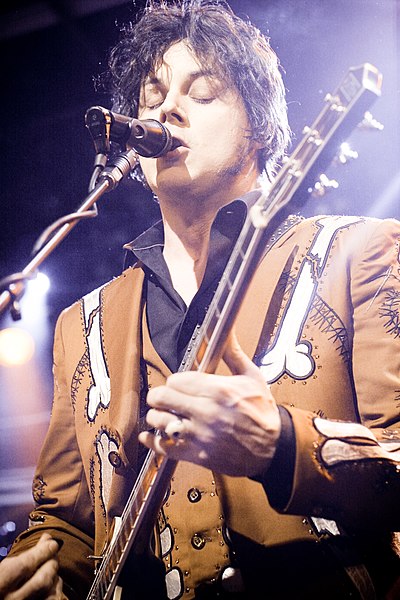
Marcadores: alternative Rock, bluegrass, blues-rock, garage rock, Jack White, Punk blues, Rock, Seven Nation Army, The White Stripes

Nicholas John Cester (Melbourne, 6 July 1979) is an Australian musician, singer, songwriter and guitarist, known for being the frontman and lead singer in rock band Jet alongside his younger brother Chris. Cester is also a founder of the Australian supergroup The Wrights. Jet's track "Are You Gonna Be My Girl", has won APRA Awards for 'Most Performed Australian Work Overseas' in 2006 and 2007.
in Wikipédia
Postado por
Fernando Martins
às
00:46
0
bocas
Marcadores: alternative Rock, Are You Gonna Be My Girl, Austrália, garage rock, hard rock, indie rock, Jet, música, Nic Cester
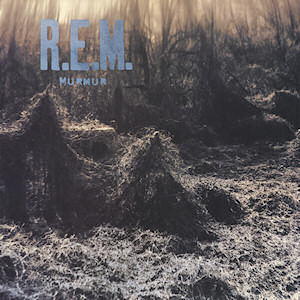
Murmur is the debut studio album by American alternative rock band R.E.M., released on April 12, 1983, by I.R.S. Records. The album was recorded in the winter of 1983 at Reflection Studios in Charlotte, North Carolina, with musicians Don Dixon and Mitch Easter serving as producers. Murmur drew critical acclaim upon its release for its unconventional sound, defined by lead singer Michael Stipe's cryptic lyrics, guitarist Peter Buck's jangly playing, and bassist Mike Mills's melodic basslines. In 2003, the album was ranked number 197 in Rolling Stone magazine's list of the "500 Greatest Albums of All Time". It retained the position in the 2012 list and was raised to number 165 in the 2020 revision.
in Wikipédia
Postado por
Fernando Martins
às
00:42
0
bocas
Marcadores: alternative Rock, folk rock, garage rock, jangle pop, Murmur, música, Post-punk, R.E.M., Radio Free Europe
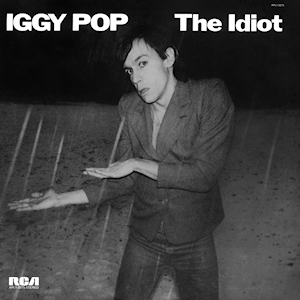
The Idiot, o primeiro álbum de estúdio do músico americano Iggy Pop, foi lançado a 18 de março de 1977 pela RCA Records. Foi produzido por David Bowie e gravado principalmente no Château d'Hérouville ,na França. Lançado após a separação dos Stooges, marca um período em que Bowie e Pop se mudaram para a Europa, num esforço para se livrarem do vício das drogas.
Descrito por Iggy como "um cruzamento entre James Brown e Kraftwerk ", The Idiot marca uma mudança de som do proto-punk dos The Stooges para um som mais suave, sombrio e mecânico, com nuances eletrónicas. A gravação começou no Château em junho de 1976 e prosseguiu até julho. Outras sessões aconteceram no Musicland Studios, em Munique, em agosto. Bowie compôs a maior parte das melodias e contribuiu com grande parte da instrumentação, enquanto Iggy concentrou-se principalmente na escrita das letras, em sintonia com a música que Bowie estava desenvolvendo. O título do álbum foi inspirado no romance O Idiota, de Fiódor Dostoiévski, enquanto a arte da capa é uma releitura da tela Roquairol de Erich Heckel.
Após a conclusão do disco, Bowie começou a gravar o seu próximo álbum, Low, que apresenta uma sonoridade semelhante a The Idiot. Low foi lançado em janeiro de 1977 e foi um sucesso comercial, obrigando a RCA Records a lançar The Idiot dois meses depois. Após o seu lançamento, o álbum recebeu críticas divididas, embora amplamente positivas, dos críticos musicais, muitos dos quais notaram uma mudança no tom musical em relação ao trabalho anterior de Iggy com os Stooges. Foi acompanhado pelo lançamento de dois singles, "Sister Midnight" e "China Girl", em fevereiro e maio de 1977, respetivamente. Mais tarde, Bowie lançou a sua própria versão de "China Girl", como single em 1983.
Iggy promoveu o álbum com uma turnê entre março e abril de 1977, com Bowie como teclista. Posteriormente, ambos colaboraram novamente no segundo álbum de estúdio de Iggy, Lust For Life. O álbum influenciou bandas de pós-punk, industriais e góticas, incluindo os Joy Division. Segundo se conta, em 1980, o vocalista da banda Joy Division, Ian Curtis, cometeu suicídio enforcando-se na cozinha da sua casa enquanto ouvia este álbum.
in Wikipédia
Postado por
Fernando Martins
às
00:44
0
bocas
Marcadores: Beth Ditto, dance-punk, garage rock, Gossip, Heavy Cross, homossexuais, indie rock, música, Punk blues
Caleb é filho de Betty Ann e Ivan Leon Followill, um pastor da Igreja Pentecostal Evangelista, que viajava ao longo do sul dos Estados Unidos.
Caleb atualmente é casado com a modelo norte-americana, Lily Aldridge, que apareceu com ele no vídeo da música Use Somebody.
Postado por
Fernando Martins
às
00:43
0
bocas
Marcadores: Caleb Followill, garage rock, guitarra, Kings of Leon, música, Rock alternativo, Use Somebody
I Wanna Be Your Dog - The Stooges
Postado por
Fernando Martins
às
00:16
0
bocas
Marcadores: garage rock, guitarra, hard rock, I wanna be your dog, Iggy Pop, música, Proto-punk, punk rock, rock psicadélico, Ron Asheton
Postado por
Pedro Luna
às
04:09
0
bocas
Marcadores: alternative Rock, bluegrass, blues-rock, garage rock, Jack White, Jolene, Punk blues, Rock, The White Stripes
in Wikipédia
Postado por
Fernando Martins
às
00:49
0
bocas
Marcadores: alternative Rock, bluegrass, blues-rock, garage rock, Jack White, Punk blues, Rock, Seven Nation Army, The White Stripes
Murmur is the debut studio album by American alternative rock band R.E.M., released on April 12, 1983, by I.R.S. Records. Murmur drew critical acclaim upon its release for its unusual sound, defined by lead singer Michael Stipe's cryptic lyrics, guitarist Peter Buck's jangly guitar style, and bass guitarist Mike Mills's melodic basslines.
in Wikipédia
Postado por
Fernando Martins
às
00:41
0
bocas
Marcadores: alternative Rock, folk rock, garage rock, jangle pop, Murmur, música, Post-punk, R.E.M., Radio Free Europe
Described by Pop as "a cross between James Brown and Kraftwerk", The Idiot marks a departure from the proto-punk of the Stooges to a more subdued, mechanical sound with electronic overtones. Recording for it began at the château in June 1976 and continued into July. Further sessions took place at Musicland Studios in Munich in August. Bowie composed most of the music and contributed a major portion of the instrumentation. Pop wrote most of the lyrics in response to the music Bowie was creating. The album's title was taken from Fyodor Dostoevsky's novel of the same name, while Erich Heckel's painting Roquairol inspired its artwork.
After the album was completed, Bowie began recording his next album Low, which features a sound similar to The Idiot. Low was released in January 1977 and was a commercial success, compelling RCA Records to release The Idiot two months later. Upon its release, the album received divided, albeit largely positive reviews from music critics, many of whom noted a change in musical tone from Pop's earlier work with the Stooges. It charted in the US, the UK, and Australia. It was accompanied by the release of two singles, "Sister Midnight" and "China Girl", in February and May 1977, respectively; Bowie later issued his own version of "China Girl" as a single in 1983.
Pop supported The Idiot with a tour in March and April 1977, with Bowie as his keyboardist. Afterwards, the two collaborated again on Pop's second studio album, Lust for Life (1977). Retrospectively, The Idiot has continued to be received positively, with many noting Pop's artistic evolution. However, because Bowie largely created it, fans do not generally consider the album as being representative of Pop's output. It has influenced post-punk, industrial, and gothic acts, including Joy Division.
in Wikipédia
Postado por
Fernando Martins
às
00:43
0
bocas
Marcadores: Beth Ditto, dance-punk, garage rock, Gossip, Heavy Cross, homossexuais, indie rock, música, Punk blues
Caleb é filho de Betty Ann e Ivan Leon Followill, um pastor da Igreja Pentecostal Evangelista, que viajava ao longo do sul dos Estados Unidos.
Caleb atualmente é casado com a modelo norte-americana, Lily Aldridge, que apareceu com ele no vídeo da música Use Somebody.
Postado por
Fernando Martins
às
04:20
0
bocas
Marcadores: Caleb Followill, garage rock, guitarra, Kings of Leon, música, Rock alternativo, Use Somebody
I Wanna Be Your Dog - The Stooges
Postado por
Fernando Martins
às
00:15
0
bocas
Marcadores: garage rock, guitarra, hard rock, I wanna be your dog, Iggy Pop, música, Proto-punk, punk rock, rock psicadélico, Ron Asheton
in Wikipédia
Postado por
Fernando Martins
às
00:48
0
bocas
Marcadores: alternative Rock, bluegrass, blues-rock, garage rock, Jack White, Punk blues, Rock, Seven Nation Army, The White Stripes
Murmur is the debut studio album by American alternative rock band R.E.M., released on April 12, 1983, by I.R.S. Records. Murmur drew critical acclaim upon its release for its unusual sound, defined by lead singer Michael Stipe's cryptic lyrics, guitarist Peter Buck's jangly guitar style, and bass guitarist Mike Mills's melodic basslines.
Recording
R.E.M. started preparing for their debut album in December 1982. I.R.S. paired R.E.M. with producer Stephen Hague, who had a higher profile than the band's previous producer Mitch Easter. Hague's emphasis on technical perfection did not suit the band; the producer made the group perform multiple takes of the song "Catapult", which demoralized drummer Bill Berry. Also, Hague took the completed track to Synchro Sound studios in Boston and added keyboard parts to the track without the band's permission and to their dismay. Unsatisfied, the band members asked the label to let them record with Easter. I.R.S. agreed to a "tryout" session, allowing the band to travel to North Carolina and record the song "Pilgrimage" with Easter and producing partner Don Dixon. After hearing the track, I.R.S. permitted the group to record the album with Dixon and Easter.
On January 6, 1983, R.E.M. entered Reflection Studios in Charlotte, North Carolina, to begin recording sessions with Easter and Dixon. Much of the band's material for the album had been tested on preceding tours. Because of its bad experience with Hague, the band recorded the album via a process of negation, refusing to incorporate rock music clichés such as guitar solos or then-popular synthesizers, to give its music a timeless feel. Berry specifically was resistant to "odd" musical suggestions, insisting that his drums be recorded in a drummer's booth, a practice that was antiquated at the time. Dixon and Easter took a hands-off approach to much of the recording process. The pair would only fix up a vocal track or ask lead singer Michael Stipe to re-record a vocal if it was very substandard.
Due to Peter Buck's Fender Twin Reverb electric guitar being "dead", every song except 'Pilgrimage' featured Easter's Ampeg Gemini II. Mike Mills's Dan Armstrong bass guitar was set aside in favor of a Rickenbacker 4001, owned by Easter's girlfriend.
Recording was completed on February 23, 1983.
Packaging
The front cover features an image of a large quantity of the noxious weed kudzu, which grows so rapidly that it overtakes the landscape and kills other plants by completely shading them. The trestle featured on the back cover of the original vinyl LP release, originally part of the Georgia Railroad line into downtown Athens, has become something of a local landmark. Plans to demolish the trestle, now commonly referred to as the "Murmur Trestle", met with public outcry. On October 2, 2000, the Athens-Clarke County Mayor and Commission voted to save the trestle. In 2012, the local government said it can not afford to keep it and declared in 2016 that it would likely come down. Later that year, the Athens-Clarke County Commission suggested that a trail tax could fund its existence. The Murmur Trestle was approved for demolition in 2019, and work began in 2020 to destroy it. A replica of the original trestle is intended to be constructed, as well as preservation of some of the original trestle.
Copies of the initial tape edition - catalogue number CS 70604 - list The Velvet Underground cover "There She Goes Again" as the final track, but it is not present. This mistake was fixed with subsequent printings. The track was intended for Murmur, but removed so that all the tracks would be original and the group would not have to take a royalty cut. It was, however, included as a b-side to the IRS issue of "Radio Free Europe" instead.
Critical reception
Murmur was released in April 1983. The record reached number 36 on the Billboard album chart. A re-recorded version of "Radio Free Europe" was the album's lead single and reached number 78 on the Billboard singles chart that year. Despite the acclaim awarded the album, by the end of 1983 Murmur had only sold about 200,000 copies, which I.R.S.'s Jay Boberg felt was below expectations. Murmur was eventually certified gold (500,000 units shipped) by the Recording Industry Association of America in 1991.
The album drew substantial critical acclaim. Rolling Stone gave the album four out of five stars. Reviewer Steve Pond felt the album fulfilled the promise the band showed on Chronic Town. He wrote, "Murmur is the record on which [R.E.M.] trade that potential for results: an intelligent, enigmatic, deeply involving album, it reveals a depth and cohesiveness to R.E.M. that the EP could only suggest." He concluded, "R.E.M. is clearly the important Athens band." Jonathan Gregg of Record described Murmur as "a splendid little film noir of an album, austere but rich in implication." He particularly praised the band's distinctive "twitchy, restless dance beat" and the incomprehensibility of the album's meaning, noting that Stipe's already enigmatic lyrics are often hard to make out due to being sung with a deliberate slur, lost in a muddy mix, and/or drowned out by the instrumental work, resulting in an impressive sense of meaning even as the meaning itself is not understood. It was Rolling Stone's Best Album of 1983, beating Michael Jackson's Thriller, The Police's Synchronicity and U2's War. Buck noted in 2002 that I.R.S. was "mind-boggled" by the album's positive reviews, especially in the British press, since R.E.M. had not yet toured that country.
Accolades
All songs written by Bill Berry, Peter Buck, Mike Mills and Michael Stipe, except where noted.
Side one
Side two
in Wikipédia
Postado por
Fernando Martins
às
00:40
0
bocas
Marcadores: alternative Rock, folk rock, garage rock, jangle pop, Murmur, música, Post-punk, R.E.M., Radio Free Europe