segunda-feira, novembro 24, 2025
O fóssil de Australopithecus afarensis apelidado de Lucy foi descoberto há 51 anos...!
Postado por
Fernando Martins
às
00:51
0
bocas
Marcadores: Australopithecus afarensis, Lucy, Lucy in the Sky with Diamonds, paleoantropologia, Paleontologia, The Beatles
sábado, novembro 15, 2025
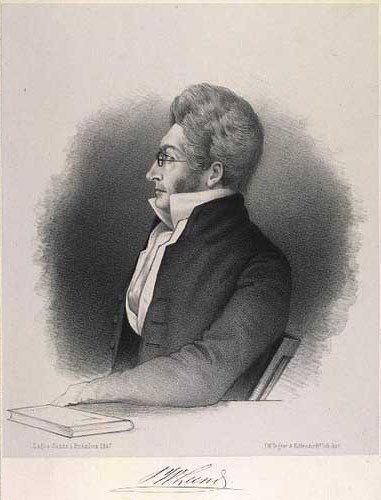
Venceslau de Lima, um geólogo e político monárquico que foi primeiro-ministro, nasceu há 167 anos
- Notícia sôbre os vegetais fósseis da flora neocomiana do solo português;
- Monografia do gênero Dicranophillum (Sistema Carbónico);
- Notice sur une algue palèozoique;
- Notícia sôbre as camadas da série permo-carbónica do Bussaco;
- Note sur une nouvel Eurypterus rothliegendes.
Postado por
Fernando Martins
às
16:07
0
bocas
Marcadores: Ferreirinha, Geologia, monárquicos, Paleontologia, primeiro-ministro, Venceslau de Lima
quarta-feira, outubro 29, 2025
Othniel Charles Marsh, um dos protagonistas da guerra dos ossos, nasceu há 194 anos
He also named the families Allosauridae (1878), Anchisauridae (1885), Camptosauridae (1885), Ceratopsidae (1890), Ceratosauridae, Coeluridae, Diplodocidae (1884), Dryptosauridae (1890), Nodosauridae (1890), Ornithomimidae (1890), Plateosauridae (1895), and Stegosauridae (1880).
He also named many individual species of dinosaurs.
Dinosaurs named by others in honour of Marsh include Hoplitosaurus marshi (Lucas, 1901), Iaceornis marshi (Clarke, 2004), Marshosaurus (Madsen, 1976), Othnielia (Galton, 1977), and Othnielosaurus (Galton, 2007).
Marsh's finds formed the original core of the collection of Yale's Peabody Museum of Natural History. The museum's Great Hall is dominated by the first fossil skeleton of Brontosaurus that he discovered, which was reclassified as Apatosaurus for a time. However, an extensive study published in 2015 concluded that Brontosaurus was a valid genus of sauropod distinct from Apatosaurus.
He donated his home in New Haven, Connecticut, to Yale University in 1899. The Othniel C. Marsh House, now known as Marsh Hall, is designated a National Historic Landmark. The grounds are now known as the Marsh Botanical Garden.
Marsh was elected a member of the American Antiquarian Society in 1877.
Marsh formulated the Law of brain growth, which states that, during the tertiary period, many taxonomic groups presented gradual increase in the size of the brain. This evolutionary law remains being used due to its explanatory, and to a certain extent, predictive potential
Postado por
Fernando Martins
às
19:40
0
bocas
Marcadores: guerra dos ossos, Museu Peabody de História Natural, Othniel Charles Marsh, Othniel Marsh, Paleontologia, USA
quarta-feira, setembro 10, 2025
Stephen Jay Gould nasceu há oitenta e quatro anos...
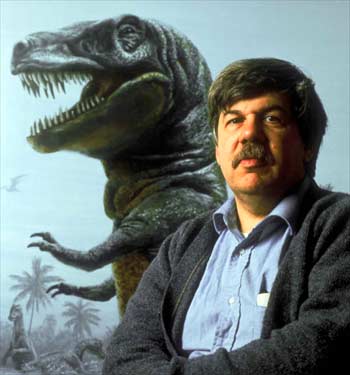
Stephen Jay Gould (Nova Iorque, 10 de setembro de 1941 - Nova Iorque, 20 de maio de 2002) foi um paleontólogo e biólogo evolucionista dos Estados Unidos. Foi também um autor importante no que diz respeito à história da ciência. É reconhecido como o mais lido e conhecido divulgador científico da sua geração.
Desde de 1973 Gould era o Curador da coleção de Paleontologia de Invertebrados do Museu de Zoologia Comparada de Harvard e membro adjunto do Departamento de História das Ciências em Harvard. Em 1983 tornou-se Professor de Zoologia da Cátedra Alexander Agassiz (também na Universidade de Harvard) e em 1996 Professor Convidado de Biologia da Cátedra Vicent Astor na Universidade de Nova York. Gould manteve todos estes cargos até 2002.
Em julho de 1982, Gould foi diagnosticado com mesotelioma peritoneal, um tipo letal de cancro que afeta o revestimento abdominal (o peritoneu). Esse cancro é frequentemente encontrado em pessoas que ingeriram ou inalaram fibras de amianto, um mineral que foi utilizado na construção do Museu de Zoologia Comparada de Harvard. Depois de uma recuperação difícil de dois anos, Gould publicou em 1985 uma coluna para a revista Discover, intitulada “The Median Isn't the Message”, discutindo sua reação ao ler que “o mesotelioma é incurável, com mortalidade mediana de apenas oito meses após a descoberta”. No seu ensaio, ele descreve o real significado desse fato e o alívio ao perceber que médias estatísticas são abstrações úteis, mas, sozinhas, não englobam “o nosso mundo real de variação, matizes e contínuos”.
Gould também foi um defensor do uso medicinal de canabis. Durante os seus tratamentos contra o cancro, fumou canabis para ajudar a aliviar os longos períodos de náusea intensa e incontrolável. De acordo com Gould, a droga teve um “efeito muito importante” na sua recuperação final. Posteriormente, ele questionou como “qualquer pessoa humana poderia negar tal substância benéfica a indivíduos em grande necessidade simplesmente porque outros a utilizam para propósitos diferentes”. Em 5 de agosto de 1998, o depoimento de Gould ajudou a obter êxito no processo movido pelo ativista portador de HIV Jim Wakeford contra o Governo do Canadá para ter o direito de cultivar, possuir e usar canabis para fins medicinais.
Doença final e morte
Em fevereiro de 2002, uma lesão de aproximadamente 3 centímetros foi encontrada na radiografia de tórax de Gould, e oncologistas diagnosticaram-no com cancro em estágio IV. Gould faleceu dez semanas depois, em 20 de maio de 2002, devido a um adenocarcinoma metastático de pulmão (uma forma agressiva de cancro que já se havia espalhado para o cérebro, fígado e baço). Esse cancro não estava relacionado ao enfrentado em 1982, embora também esteja associado à exposição ao amianto. Ele morreu na sua casa, “numa cama montada na biblioteca de seu loft no SoHo, rodeado pela sua esposa, Rhonda, por sua mãe, Eleanor, e pelos muitos livros que amava”.
Postado por
Fernando Martins
às
08:40
0
bocas
Marcadores: Biologia, divulgação científica, equilíbrio pontuado, Geologia, Paleontologia, Stephen Jay Gould
sábado, agosto 30, 2025
Os Xistos de Burgess foram descobertos há 116 anos
History and significance
The Burgess Shale was discovered by palaeontologist Charles Walcott
on 30 August 1909, towards the end of the season's fieldwork. He
returned in 1910 with his sons, daughter, and wife, establishing a
quarry on the flanks of Fossil Ridge. The significance of soft-bodied
preservation, and the range of organisms he recognised as new to
science, led him to return to the quarry almost every year until 1924.
At that point, aged 74, he had amassed over 65,000 specimens. Describing
the fossils was a vast task, pursued by Walcott until his death in
1927. Walcott, led by scientific opinion at the time, attempted to
categorise all fossils into living taxa, and as a result, the fossils
were regarded as little more than curiosities at the time. It was not
until 1962 that a first-hand reinvestigation of the fossils was
attempted, by Alberto Simonetta. This led scientists to recognise that
Walcott had barely scratched the surface of information available in
the Burgess Shale, and also made it clear that the organisms did not
fit comfortably into modern groups.
Excavations were resumed at the Walcott Quarry by the Geological Survey of Canada under the persuasion of trilobite expert Harry Blackmore Whittington,
and a new quarry, the Raymond, was established about 20 metres higher
up Fossil Ridge. Whittington, with the help of research students Derek Briggs and Simon Conway Morris of the University of Cambridge,
began a thorough reassessment of the Burgess Shale, and revealed that
the fauna represented were much more diverse and unusual than Walcott
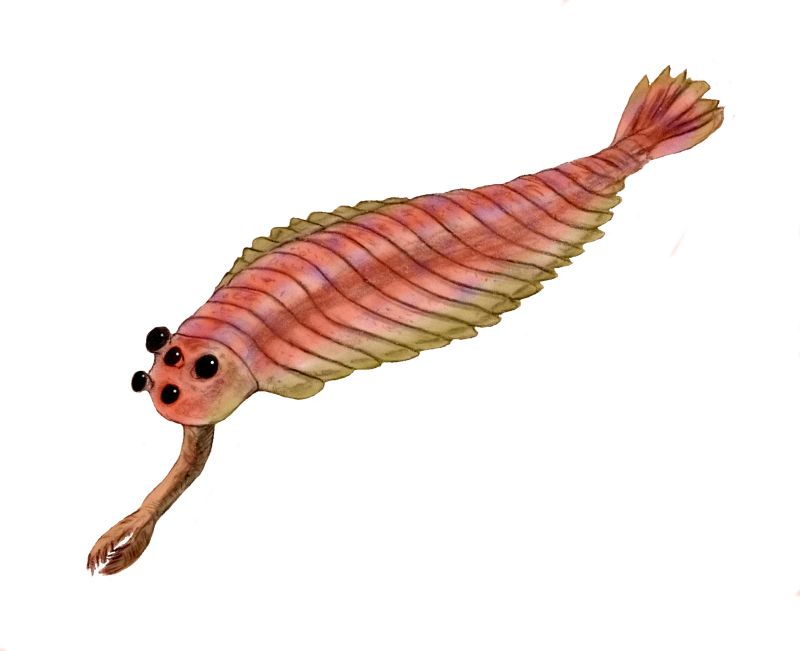
had recognized. Indeed, many of the animals present had bizarre anatomical features and only the slightest resemblance to other known animals. Examples include Opabinia, with five eyes and a snout like a vacuum cleaner hose and Hallucigenia, which was originally reconstructed upside down, walking on bilaterally symmetrical spines.
With Parks Canada and UNESCO
recognising the significance of the Burgess Shale, collecting fossils
became politically more difficult from the mid-1970s. Collections
continued to be made by the Royal Ontario Museum. The curator of invertebrate palaeontology, Desmond Collins, identified a number of additional outcrops, stratigraphically
both higher and lower than the original Walcott quarry. These
localities continue to yield new organisms faster than they can be
studied.
Stephen Jay Gould's book Wonderful Life,
published in 1989, brought the Burgess Shale fossils to the public's
attention. Gould suggests that the extraordinary diversity of the
fossils indicates that life forms at the time were much more disparate
in body form than those that survive today, and that many of the unique
lineages were evolutionary experiments that became extinct. Gould's
interpretation of the diversity of Cambrian fauna relied heavily on Simon Conway Morris's
reinterpretation of Charles Walcott's original publications. However,
Conway Morris strongly disagreed with Gould's conclusions, arguing that
almost all the Cambrian fauna could be classified into modern day phyla.
The Burgess Shale has attracted the interest of paleoclimatologists who want to study and predict long-term future changes in Earth's climate. According to Peter Ward and Donald Brownlee in the 2003 book The Life and Death of Planet Earth, climatologists study the fossil records in the Burgess Shale to understand the climate of the Cambrian explosion,
and use it to predict what Earth's climate would look like 500 million
years in the future when a warming and expanding Sun combined with
declining CO2 and oxygen levels eventually heat the Earth toward temperatures not seen since the Archean
Eon 3 billion years ago, before the first plants and animals appeared,
and therefore understand how and when the last living things will die
out.
After the Burgess Shale site was registered as a World Heritage Site in 1980, it was included in the Canadian Rocky Mountain Parks WHS designation in 1984.
In February 2014, the discovery was announced of another Burgess Shale outcrop in Kootenay National Park to the south. In just 15 days of field collecting in 2013, 50 animal species were unearthed at the new site.
Postado por
Fernando Martins
às
01:16
0
bocas
Marcadores: Anomalocaris, Burgess Shale, Câmbrico, Canadá, Charles Walcott, explosão câmbrica, formação Stephen, Lagerstätte, Ottoia, Paleontologia, pedreira de Walcott, Simon Conway Morris, Stephen Jay Gould, Xistos de Burgess
sábado, agosto 23, 2025
Georges Cuvier nasceu há 256 anos
Postado por
Fernando Martins
às
02:56
0
bocas
Marcadores: Anatomia Comparada, catastrofismo, Cuvier, Georges Cuvier, naturalista, Paleontologia
terça-feira, agosto 12, 2025
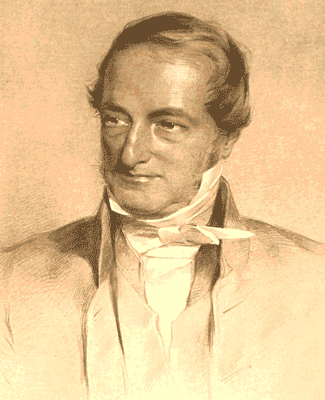
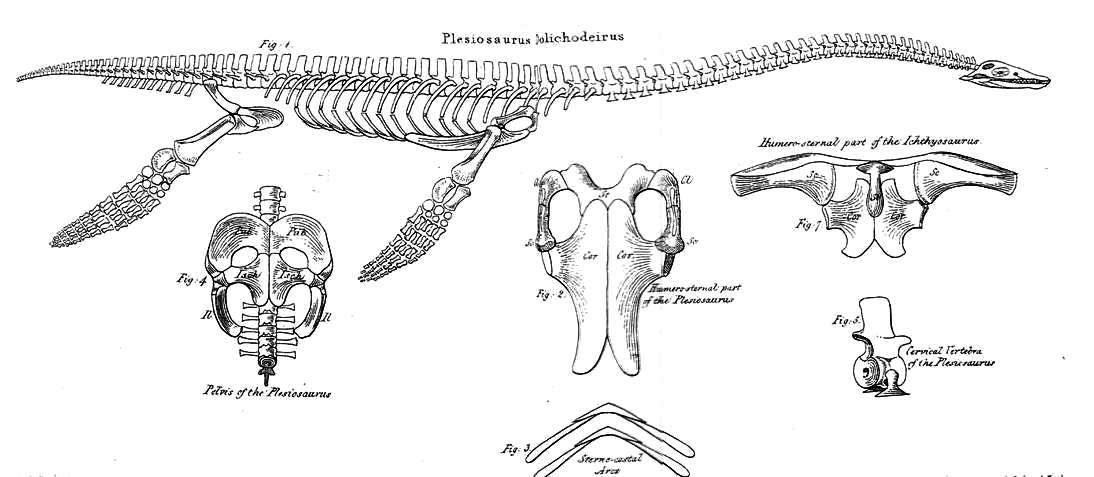
O paleontólogo William Conybeare morreu há 168 anos
Postado por
Fernando Martins
às
16:08
0
bocas
Marcadores: Paleontologia, plesiossauros, William Conybeare
sexta-feira, agosto 08, 2025
O paleontólogo Henry Fairfield Osborn nasceu há 168 anos
Postado por
Fernando Martins
às
16:08
0
bocas
Marcadores: Henry Fairfield Osborn, Paleontologia, Tyrannosaurus rex, Velociraptor
segunda-feira, julho 28, 2025
Edward Drinker Cope nasceu há 185 anos
Postado por
Fernando Martins
às
18:50
0
bocas
Marcadores: Edward Drinker Cope, guerra dos ossos, Paleontologia
domingo, julho 20, 2025
Richard Owen nasceu há 221 anos
Postado por
Fernando Martins
às
02:21
0
bocas
Marcadores: Anatomia Comparada, Biologia, Dinossáurios, Paleontologia, Richard Owen
sexta-feira, junho 20, 2025
O paleontólogo Harry B. Whittington morreu há quinze anos...
- O estudo da morfologia das trilobites, ecologia e estratigrafia fóssil, juntamente com a paleogeografia.
- O estudo da fauna dos Xistos de Burgess, trabalho realizado em conjunto com os seus assistentes Derek Briggs e Simon Conway Morris, e que levou à clarificação da natureza da Explosão Câmbrica.
Postado por
Fernando Martins
às
00:15
0
bocas
Marcadores: explosão câmbrica, Harry Whittington, Paleontologia, trilobites, Xistos de Burgess
sábado, junho 14, 2025
O naturalista Peter Wilhelm Lund nasceu há 224 anos

Peter Wilhelm Lund (Copenhaga, 14 de junho de 1801 – Lagoa Santa, 25 de maio de 1880) foi um dos naturalistas dinamarqueses mais notáveis do século XIX, e é considerado o pai da paleontologia e arqueologia no Brasil. Após ter-se mudado definitivamente para o Brasil em 1833, fez extraordinárias escavações em grutas calcárias no vale do Rio das Velhas, em Minas Gerais durante 10 anos, descrevendo minuciosamente a fauna de mamíferos dessa região e as mudanças ambientais que aconteceram desde o Plistocénico.
Na sua obra-prima, A Origem das Espécies, Charles Darwin menciona a admirável coleção de ossadas fósseis recolhidas nas cavernas do Brasil por Lund, que se encontra no Museu de História Natural da Dinamarca, em Copenhaga.
Lund era primo do filósofo Søren Kierkegaard e do bispo Peter Kierkegaard.
Peter Lund e colaboradores trabalhando numa caverna
in Wikipédia
Postado por
Fernando Martins
às
22:40
0
bocas
Marcadores: Arqueologia, Brasil, Dinamarca, Paleontologia, Peter Wilhelm Lund, Plistocénico


.jpg)


_aged.jpg)