terça-feira, março 03, 2026
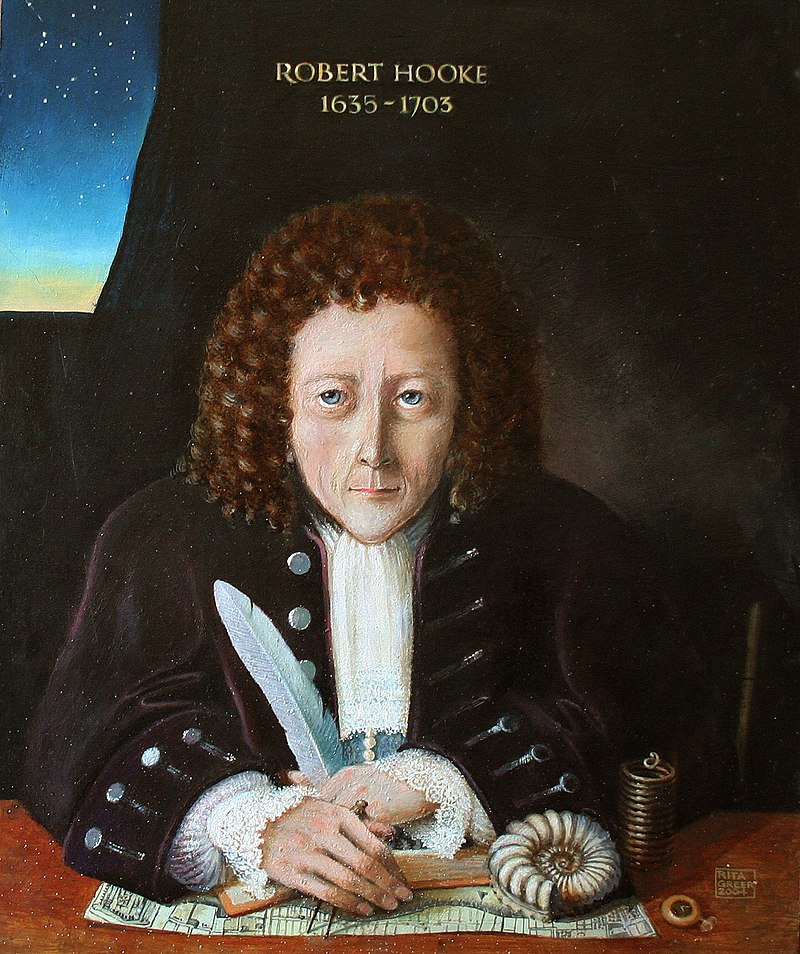
Robert Hooke morreu há 323 anos...
Postado por Fernando Martins às 03:23 0 comentários
Marcadores: célula, evolução, Física, Lei de Hooke, Paleontologia, polimata, Química, Robert Hooke
domingo, fevereiro 08, 2026
John von Neumann morreu há 69 anos...
A von Neumann probe is a spacecraft capable of replicating itself. It is a concatenation of two concepts: a "Von Neumann universal constructor" (self-replicating machine) and a probe (an instrument to explore or examine something). The concept is named after Hungarian American mathematician and physicist John von Neumann, who rigorously studied the concept of self-replicating machines that he called "Universal Assemblers" and which are often referred to as "von Neumann machines". Such constructs could be theorised to comprise five basic components (variations of this template could create other machines such as Bracewell probes):
- Probe: which would contain the actual probing instruments & goal-directed AI to guide the construct.
- Life-support systems: mechanisms to repair and maintain the construct.
- Factory: mechanisms to harvest resources & replicate itself.
- Memory banks: store programs for all its components & information gained by the probe.
- Engine: motor to move the probe.
Andreas Hein and science fiction author Stephen Baxter proposed different types of von Neumann probes, termed "Philosopher" and "Founder", where the purpose of the former is exploration and for the latter preparing future settlement.
A near-term concept of a self-replicating probe has been proposed by the Initiative for Interstellar Studies, achieving about 70% self-replication, based on current and near-term technologies.
If a self-replicating probe finds evidence of primitive life (or a primitive, low-level culture) it might be programmed to lie dormant, silently observe, attempt to make contact (this variant is known as a Bracewell probe), or even interfere with or guide the evolution of life in some way.
Physicist Paul Davies of Arizona State University has raised the possibility of a probe resting on our own Moon, having arrived at some point in Earth's ancient prehistory and remained to monitor Earth, which is reminiscent of Arthur C. Clarke's "The Sentinel" and the Stanley Kubrick film 2001: A Space Odyssey that was based on Clarke's story.
A variant idea on the interstellar von Neumann probe idea is that of the "Astrochicken", proposed by Freeman Dyson. While it has the common traits of self-replication, exploration, and communication with its "home base", Dyson conceived the Astrochicken to explore and operate within our own planetary system, and not explore interstellar space.
Anders Sandberg and Stuart Armstrong argued that launching the colonization of the entire reachable universe through self-replicating probes is well within the capabilities of a star-spanning civilization, and proposed a theoretical approach for achieving it in 32 years, by mining planet Mercury for resources and constructing a Dyson Swarm around the Sun.Postado por Fernando Martins às 06:09 0 comentários
Marcadores: estatística, judeus, Matemática, polimata, Projecto Manhattan, Sonda de Von Neumann, von Neumann
sexta-feira, maio 02, 2025
Leonardo da Vinci morreu há 506 anos...
Leonardo di Ser Piero da Vinci, ou simplesmente Leonardo da Vinci (Anchiano, 15 de abril de 1452 - Amboise, 2 de maio de 1519), foi um polímata italiano, uma das figuras mais importantes do Alto Renascimento, que se destacou como cientista, matemático, engenheiro, inventor, anatomista, pintor, escultor, arquiteto, botânico, poeta e músico. É ainda conhecido como o percursor da aviação e da balística. Leonardo frequentemente foi descrito como o arquétipo do homem do Renascimento, alguém cuja curiosidade insaciável era igualada apenas pela sua capacidade de invenção. É considerado um dos maiores pintores de todos os tempos e como possivelmente a pessoa dotada de talentos mais diversos a ter vivido. Segundo a historiadora de arte Helen Gardner, a profundidade e o alcance de seus interesses não tiveram precedentes e sua mente e personalidade parecem sobre-humanos para nós, e o homem em si [parece-nos] misterioso e distante.
in Wikipédia
Postado por Fernando Martins às 05:06 0 comentários
Marcadores: anatomia, Arquitectura, escultura, Itália, Leonardo da Vinci, música, Paleontologia, pintura, poesia, polimata, Renascimento
terça-feira, abril 15, 2025
Leonardo da Vinci nasceu há 573 anos
Leonardo di Ser Piero da Vinci, ou simplesmente Leonardo da Vinci (Anchiano, 15 de abril de 1452 - Amboise, 2 de maio de 1519), foi um polímata italiano, uma das figuras mais importantes do Alto Renascimento, que se destacou como cientista, matemático, engenheiro, inventor, anatomista, pintor, escultor, arquiteto, botânico, poeta e músico. É ainda conhecido como o percursor da aviação e da balística. Leonardo frequentemente foi descrito como o arquétipo do homem do Renascimento, alguém cuja curiosidade insaciável era igualada apenas pela sua capacidade de invenção. É considerado um dos maiores pintores de todos os tempos e como possivelmente a pessoa dotada de talentos mais diversos a ter vivido. Segundo a historiadora de arte Helen Gardner, a profundidade e o alcance de seus interesses não tiveram precedentes e sua mente e personalidade parecem sobre-humanos para nós, e o homem em si [parece-nos] misterioso e distante.
in Wikipédia
Postado por Pedro Luna às 00:57 0 comentários
Marcadores: anatomia, Arquitectura, escultura, Itália, Leonardo da Vinci, música, Paleontologia, pintura, poesia, polimata, Renascimento
segunda-feira, março 03, 2025
Robert Hooke morreu há 322 anos...
Postado por Fernando Martins às 03:22 0 comentários
Marcadores: célula, evolução, Física, Lei de Hooke, Paleontologia, polimata, Química, Robert Hooke
sábado, fevereiro 08, 2025
John von Neumann morreu há 68 anos...
A von Neumann probe is a spacecraft capable of replicating itself. It is a concatenation of two concepts: a "Von Neumann universal constructor" (self-replicating machine) and a probe (an instrument to explore or examine something). The concept is named after Hungarian American mathematician and physicist John von Neumann, who rigorously studied the concept of self-replicating machines that he called "Universal Assemblers" and which are often referred to as "von Neumann machines". Such constructs could be theorised to comprise five basic components (variations of this template could create other machines such as Bracewell probes):
- Probe: which would contain the actual probing instruments & goal-directed AI to guide the construct.
- Life-support systems: mechanisms to repair and maintain the construct.
- Factory: mechanisms to harvest resources & replicate itself.
- Memory banks: store programs for all its components & information gained by the probe.
- Engine: motor to move the probe.
Andreas Hein and science fiction author Stephen Baxter proposed different types of von Neumann probes, termed "Philosopher" and "Founder", where the purpose of the former is exploration and for the latter preparing future settlement.
A near-term concept of a self-replicating probe has been proposed by the Initiative for Interstellar Studies, achieving about 70% self-replication, based on current and near-term technologies.
If a self-replicating probe finds evidence of primitive life (or a primitive, low-level culture) it might be programmed to lie dormant, silently observe, attempt to make contact (this variant is known as a Bracewell probe), or even interfere with or guide the evolution of life in some way.
Physicist Paul Davies of Arizona State University has raised the possibility of a probe resting on our own Moon, having arrived at some point in Earth's ancient prehistory and remained to monitor Earth, which is reminiscent of Arthur C. Clarke's "The Sentinel" and the Stanley Kubrick film 2001: A Space Odyssey that was based on Clarke's story.
A variant idea on the interstellar von Neumann probe idea is that of the "Astrochicken", proposed by Freeman Dyson. While it has the common traits of self-replication, exploration, and communication with its "home base", Dyson conceived the Astrochicken to explore and operate within our own planetary system, and not explore interstellar space.
Anders Sandberg and Stuart Armstrong argued that launching the colonization of the entire reachable universe through self-replicating probes is well within the capabilities of a star-spanning civilization, and proposed a theoretical approach for achieving it in 32 years, by mining planet Mercury for resources and constructing a Dyson Swarm around the Sun.Postado por Fernando Martins às 06:08 0 comentários
Marcadores: estatística, judeus, Matemática, polimata, Projecto Manhattan, Sonda de Von Neumann, von Neumann
quinta-feira, maio 02, 2024
Leonardo da Vinci morreu há 505 anos...
Leonardo di Ser Piero da Vinci, ou simplesmente Leonardo da Vinci (Anchiano, 15 de abril de 1452 - Amboise, 2 de maio de 1519), foi um polímata italiano, uma das figuras mais importantes do Alto Renascimento, que se destacou como cientista, matemático, engenheiro, inventor, anatomista, pintor, escultor, arquiteto, botânico, poeta e músico. É ainda conhecido como o percursor da aviação e da balística. Leonardo frequentemente foi descrito como o arquétipo do homem do Renascimento, alguém cuja curiosidade insaciável era igualada apenas pela sua capacidade de invenção. É considerado um dos maiores pintores de todos os tempos e como possivelmente a pessoa dotada de talentos mais diversos a ter vivido. Segundo a historiadora de arte Helen Gardner, a profundidade e o alcance de seus interesses não tiveram precedentes e sua mente e personalidade parecem sobre-humanos para nós, e o homem em si [parece-nos] misterioso e distante.
in Wikipédia
Postado por Fernando Martins às 05:05 0 comentários
Marcadores: anatomia, Arquitectura, escultura, Itália, Leonardo da Vinci, música, Paleontologia, pintura, poesia, polimata, Renascimento
segunda-feira, abril 15, 2024
Leonardo da Vinci nasceu há 572 anos
Leonardo di Ser Piero da Vinci, ou simplesmente Leonardo da Vinci (Anchiano, 15 de abril de 1452 - Amboise, 2 de maio de 1519), foi um polímata italiano, uma das figuras mais importantes do Alto Renascimento, que se destacou como cientista, matemático, engenheiro, inventor, anatomista, pintor, escultor, arquiteto, botânico, poeta e músico. É ainda conhecido como o percursor da aviação e da balística. Leonardo frequentemente foi descrito como o arquétipo do homem do Renascimento, alguém cuja curiosidade insaciável era igualada apenas pela sua capacidade de invenção. É considerado um dos maiores pintores de todos os tempos e como possivelmente a pessoa dotada de talentos mais diversos a ter vivido. Segundo a historiadora de arte Helen Gardner, a profundidade e o alcance de seus interesses não tiveram precedentes e sua mente e personalidade parecem sobre-humanos para nós, e o homem em si [parece-nos] misterioso e distante.
in Wikipédia
Postado por Fernando Martins às 00:57 0 comentários
Marcadores: anatomia, Arquitectura, escultura, Itália, Leonardo da Vinci, música, Paleontologia, pintura, poesia, polimata, Renascimento
domingo, março 03, 2024
Robert Hooke morreu há 321 anos
Postado por Fernando Martins às 03:21 0 comentários
Marcadores: célula, evolução, Física, Lei de Hooke, Paleontologia, polimata, Química, Robert Hooke
quinta-feira, fevereiro 08, 2024
John von Neumann faleceu há 67 anos...
A von Neumann probe is a spacecraft capable of replicating itself. It is a concatenation of two concepts: a "Von Neumann universal constructor" (self-replicating machine) and a probe (an instrument to explore or examine something). The concept is named after Hungarian American mathematician and physicist John von Neumann, who rigorously studied the concept of self-replicating machines that he called "Universal Assemblers" and which are often referred to as "von Neumann machines". Such constructs could be theorised to comprise five basic components (variations of this template could create other machines such as Bracewell probes):
- Probe: which would contain the actual probing instruments & goal-directed AI to guide the construct.
- Life-support systems: mechanisms to repair and maintain the construct.
- Factory: mechanisms to harvest resources & replicate itself.
- Memory banks: store programs for all its components & information gained by the probe.
- Engine: motor to move the probe.
Andreas Hein and science fiction author Stephen Baxter proposed different types of von Neumann probes, termed "Philosopher" and "Founder", where the purpose of the former is exploration and for the latter preparing future settlement.
A near-term concept of a self-replicating probe has been proposed by the Initiative for Interstellar Studies, achieving about 70% self-replication, based on current and near-term technologies.
If a self-replicating probe finds evidence of primitive life (or a primitive, low-level culture) it might be programmed to lie dormant, silently observe, attempt to make contact (this variant is known as a Bracewell probe), or even interfere with or guide the evolution of life in some way.
Physicist Paul Davies of Arizona State University has raised the possibility of a probe resting on our own Moon, having arrived at some point in Earth's ancient prehistory and remained to monitor Earth, which is reminiscent of Arthur C. Clarke's "The Sentinel" and the Stanley Kubrick film 2001: A Space Odyssey that was based on Clarke's story.
A variant idea on the interstellar von Neumann probe idea is that of the "Astrochicken", proposed by Freeman Dyson. While it has the common traits of self-replication, exploration, and communication with its "home base", Dyson conceived the Astrochicken to explore and operate within our own planetary system, and not explore interstellar space.
Anders Sandberg and Stuart Armstrong argued that launching the colonization of the entire reachable universe through self-replicating probes is well within the capabilities of a star-spanning civilization, and proposed a theoretical approach for achieving it in 32 years, by mining planet Mercury for resources and constructing a Dyson Swarm around the Sun.Postado por Fernando Martins às 06:07 0 comentários
Marcadores: estatística, judeus, Matemática, polimata, Projecto Manhattan, Sonda de Von Neumann, von Neumann