O Curso de Geologia de 85/90 da Universidade de Coimbra escolheu o nome de Geopedrados quando participou na Queima das Fitas.
Ficou a designação, ficaram muitas pessoas com e sobre a capa intemporal deste nome, agora com oportunidade de partilhar as suas ideias, informações e materiais sobre Geologia, Paleontologia, Mineralogia, Vulcanologia/Sismologia, Ambiente, Energia, Biologia, Astronomia, Ensino, Fotografia, Humor, Música, Cultura, Coimbra e AAC, para fins de ensino e educação.
John Denver é mais conhecido pela sua balada Annie's Song, mas grandes sucessos mundiais foram também as canções Take Me Home, Country Roads, Sunshine On My Shoulders, Perhaps Love (em dueto com Plácido Domingo), Leaving on a Jet Plane, Don't Close Your Eyes Tonight e Come And Let Me Look In Your Eyes. Ficou também famoso por outras paixões, além da música: aviões, natureza e mulheres.
Guthrie viajou com trabalhadores migrantes de Oklahoma para a Califórnia e aprendeu canções de folk e blues tradicionais. A suas canções contam as suas experiências na Dust Bowl durante a Grande Depressão, fazendo com que ele fosse conhecido como "O trovador da Dust Bowl". Guthrie foi associado a grupos comunistas nos Estados Unidos, mas nunca foi membro do partido comunista.
Foi casado três vezes e teve oito filhos, incluindo o músico de folkArlo Guthrie. É avô da cantora Sarah Lee Guthrie. Guthrie morreu de complicações decorrentes de uma doença neurológicadegenerativa conhecida como doença de Huntington. Apesar da sua doença, durante os seus últimos anos Guthrie serviu como uma figura a ser seguida na música folclórica, proporcionando inspiração para uma nova geração de músicos folk, incluindo as relações como mentor de Ramblin 'Jack Elliott e, em menor grau, de Bob Dylan.
Don McLean (Nova Iorque, 2 de outubro de 1945) é um cantor e compositor dos Estados Unidosque ficou famoso pela canção American Pie, elegia folk-pop, de oito minutos e meio, que atingiu o topo dos hits americanos. Iniciou a sua carreira em meados dos anos 60, tocando em clubes nova-iorquinos, escolas primárias e em prol de causas ambientais.
Outros dos seus sucessos são: Vincent (um tributo a Vincent van Gogh), Castles in the Air, Since I Don’t Have You e Crying.
James Joseph Croce (Philadelphia, Pennsylvania, January 10, 1943 – Natchitoches, Louisiana, September 20, 1973) was an American folk
and rock singer-songwriter. Between 1966 and 1973, he released five
studio albums and numerous singles. During this period, Croce took a
series of odd jobs to pay bills while he continued to write, record, and
perform concerts. After Croce formed a partnership with songwriter and
guitarist Maury Muehleisen in the early 1970s, his fortunes turned. Croce's breakthrough came in 1972, his third album, You Don't Mess Around with Jim, produced three charting singles, including "Time in a Bottle", which reached No. 1 after Croce died. The follow-up album, Life and Times, included the song "Bad, Bad Leroy Brown", which was the only No. 1 hit he had during his lifetime.
On September 20, 1973, at the height of his popularity and the day before the lead single to his fifth album I Got a Name
was released, Croce and five others died in a plane crash. His music
continued to chart throughout the 1970s following his death. Croce's
wife and early songwriting partner, Ingrid, continued to write and record after his death, and their son, A. J. Croce, became a singer-songwriter in the 1990s.
John R. Cash, mais conhecido como Johnny Cash, (Kingsland, 26 de fevereiro de 1932 - Nashville, 12 de setembro de 2003) foi um cantor e compositornorte-americano
de música country, conhecido pelos seus fãs como "O Homem de Preto".
Numa carreira que durou quase cinco décadas foi, para muitas pessoas, a personificação do country. A sua voz sepulcral e o distintivo som boom chicka boom da sua banda de apoio, Tennessee Two, são algumas das suas "marcas registadas".
Nascido em 8 de setembro de 1952, em Sunderland,
Dave entrou no mundo musical literalmente por acidente. Tudo aconteceu
aos 13 anos, após sofrer uma grave contusão jogando futebol. Dave era
um excelente jogador, tendo jogado em algumas seleções inglesas
menores e durante a sua convalescença recebeu uma guitarra para passar o
tempo. Após montar um grupo, The Longdancer, Dave acabou encontrando Annie Lennox e resolveram morar juntos.
O começo foi bem difícil e eles aproveitavam qualquer chance que tinham
para entrar num estúdio e ensaiarem as suas canções. Dave e seu colega
Peet Combies procuravam um selo e só conseguiram quando apresentaram
Annie.
O resultado foi o nascimento do grupo The Catch que lançou apenas
um compacto - Borderline - antes de fracassarem terrivelmente. E o
grupo foi abandonado pelo selo quando o trio adicionou Jim Tooney e
Eddie Chin a sua formação.
O quinteto acabou mudando de nome; eram agora The Tourists. E a banda começou a ganhar alguns fãs. A mistura punk e pop, além da produção do legendário produtor alemão Conny Plank (trabalhou, entre outros, com os Kraftwerk) fez a banda crescer em palco e até fizeram um tour ao lado dos Roxy Music.
O grupo lançou três discos em dois anos - The Tourists (1979); Reality Effect (1979) e Luminous Basement (1980) e conseguiu um grande sucesso com o cover de um clássico de Dusty Springfield - "I Only Want To Be With You", do segundo disco, Reality Effect, que chegou a conseguir disco de platina.
Apesar do sucesso, Dave e Annie nunca gostaram muito do grupo ou do
formato de banda de rock e resolveram acabar com a banda após cinco
compactos e muitas disputas internas, em 1981. Depois de abandonarem a
Logo Records, foram para a RCA e resolveram mudar para a Alemanha onde,
mais uma vez, iriam trabalhar com Conny Plank.
Com ele, começaram a produzir algumas demos. A primeira
providência adotada por Dave e Annie era de jamais trabalharem
novamente com um grupo. A partir de agora, seriam apenas os dois. Para
isso, escolheram um nome diferente: Eurythmics. O nome foi tirado de uma dança grega que Annie
aprendeu quando criança e Dave vendeu à RCA que o nome tinha a ver com
elementos "europeus e rítmicos". Mesmo sem convencerem a gravadora,
adotaram o nome.
James Charles Rodgers (Meridian, Mississippi, September 8, 1897 – New York City, May 26, 1933) was an American country singer in the early 20th century, known most widely for his rhythmic yodeling. Among the first country music
superstars and pioneers, Rodgers was also known as "The Singing
Brakeman", "The Blue Yodeler", and "The Father of Country Music".
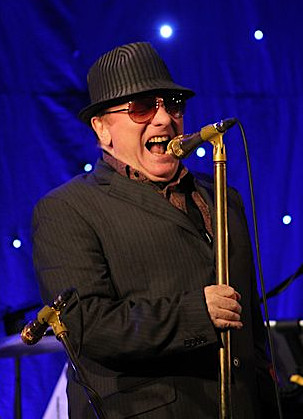
Sir George Ivan Morrison (Belfast, 31 August 1945), known professionally as Van Morrison, is a Northern Irish singer-songwriter and multi-instrumentalist whose recording career spans six decades. He has won two Grammy Awards.
Como autor, compositor e cantor,
personifica perfeitamente a sua música “O Homem dos Sete
Instrumentos”. Multifacetado, representou já em filmes, séries
televisivas e peças teatrais. A dramaturgia surge com a assinatura de algumas peças de teatro assumindo-se também como realizador.
Biografia
Sérgio Godinho nasceu em 1945, no Porto. Com apenas 18 anos de idade parte para o estrangeiro. Primeiro destino: Suíça, onde estuda Psicologia durante dois anos. Mais tarde muda-se para França. Vive o Maio de 68 na capital francesa. No ano seguinte integra a produção francesa do musical "Hair", onde se mantém por dois anos. Em Paris priva com outros músicos portugueses, como Luís Cília e José Mário Branco. Sérgio Godinho ensaiava então as suas primeiras composições, na altura em francês.
Em 1971 participa no álbum de estreia a solo de José Mário Branco,
"Mudam-se os Tempos, Mudam-se as Vontades", como músico e como autor de
quatro das letras. Em 1971 faz a sua estreia discográfica com a edição
do EP "Romance de Um Dia na Estrada" e do seu primeiro longa-duração,
"Os Sobreviventes". Três dias após a sua edição é interditado, depois
autorizado, depois novamente interditado. O disco é eleito "Melhor
Disco do Ano" e Godinho recebe o prémio da Imprensa para "Melhor Autor
do Ano".
Em 1972, Sérgio apresenta um novo álbum, "Pré-Histórias", que inclui um dos temas mais emblemáticos da sua carreira: "A Noite Passada". Colabora como letrista no álbum "Margem de Certa Maneira" de José Mário Branco.
Em 1973 muda-se para o Canadá, onde casa com Shila, colega na companhia de teatro The Living Theatre. Integra a companhia de teatro Génesis. Estabelece-se numa comunidade hippie em Vancouver, e é aqui que recebe a notícia da revolução do 25 de abril, que o leva a regressar a Portugal. Já em terras lusitanas, edita o álbum À queima-roupa (1974) um sucesso que o faz correr o país, atuando em manifestações populares, frequentes no pós 25 de abril.
Tendo regressado a Portugal após a revolução democrática do 25 de abril
de 1974, Sérgio Godinho tornou-se autor de algumas das canções mais
unanimemente aclamadas da música portuguesa - "Com Um Brilhozinho Nos Olhos", "O Primeiro Dia", "É Terça-Feira", apenas para citar três.
Em 1975 participa, com José Mário Branco e Fausto, na banda sonora do filme de Luís Galvão Teles, "A Confederação". No ano seguinte escreve a canção-tema do filme de José Fonseca e Costa "Os Demónios de Alcácer Quibir", onde participa como ator. O tema viria a ser incluído no seu novo álbum, "De Pequenino se Torce o Destino" (1976).
Em 1977 colabora em dois temas da banda sonora do filme "Nós Por Cá Todos Bem", realizado por Fernando Lopes. O seu quinto álbum de originais, "Pano-cru",
é editado no ano seguinte. Em 1979 é editado o álbum "Campolide". O
disco viria a ser premiado com o "Prémio da Crítica Música & Som"
para melhor álbum de música portuguesa desse ano.
Em 1980 volta a colaborar com o realizador José Fonseca e Costa, desta vez no clássico do cinema português, "Kilas, o Mau da Fita". O álbum com a banda sonora do filme é editado nesse mesmo ano. "Canto da Boca", novo álbum de originais, é também editado em 80, tendo recebido o prémio de "Melhor Disco Português do Ano", atribuído pela Casa da Imprensa e, ainda, o Sete de Ouro para o "Melhor Cantor Português do Ano".
Em 1983, no seu álbum "Coincidências", incluiu temas compostos em
parceria com alguns dos mais reputados músicos brasileiros - nomes como Chico Buarque, Ivan Lins ou Milton Nascimento - algo até então inédito na produção musical portuguesa.
Nos seis anos que se seguiram, Sérgio Godinho gravou mais três álbuns
de originais - "Salão de Festas", "Na Vida Real" e "Aos Amores". Foi
também editada a coletânea "Era Uma Vez Um Rapaz" (1985) e o álbum para
crianças "Sérgio Godinho Canta com os Amigos do Gaspar" (1988).
Em 1990 apresentou o espetáculo "Sérgio Godinho, Escritor de Canções",
onde revisitou as suas músicas sob uma nova perspetiva - apenas dois
músicos acompanhantes e num auditório mais pequeno, neste caso o
Instituto Franco-Português, onde fez 20 espetáculos de grande êxito.
Desses espetáculos saiu o álbum ao vivo "Escritor de Canções".
Foi autor da série "Luz na Sombra", exibida pela RTP 2 no verão de
1991, onde abordou seis programas sobre algumas das profissões menos
conhecidas do mundo da música: letristas, técnicos de som, produtores,
etc. Em 1992 realizou três filmes de ficção, de meia hora cada, com
argumento e música igualmente seus. Estes filmes, com o título genérico
de "Ultimactos", foram produzidos para a RTP, que os exibiu em 1994.
Escreveu ainda "O Pequeno Livro dos Medos", obra infanto-juvenil, que também ilustrou.
Voltou à música em 1993 com o disco "Tinta Permanente" e o espetáculo
"A Face Visível", ambos merecedores dos maiores elogios da crítica e do
público.
Em novembro de 1995 é editado o disco "Noites Passadas", que foi
gravado ao vivo em três espetáculos realizados no Teatro S. Luiz, em
novembro de 1993, e no Coliseu de Lisboa, em novembro de 1994. Neste ano
de 1995, Sérgio Godinho é convidado por Manuel Faria a participar na compilação de Natal "Espanta Espíritos" com o tema original "Apenas um Irmão" em dueto com PacMan (vocalista da banda Da Weasel).
Em junho de 1997 é editado o disco "Domingo no Mundo",
disco que conta com a participação de músicos e arranjadores de
diferentes áreas musicais: (Pop, Rock, Popular, Erudita e Jazz). O disco
foi apresentado com enorme êxito no teatro Rivoli do Porto e no
Coliseu de Lisboa, nos espetáculos de nome "Godinho no mundo".
Em 1998 foi editado o álbum "Rivolitz", gravado ao vivo nos espetáculos do Teatro Rivoli e no Ritz Clube, em Lisboa.
Em 2000 Sérgio Godinho volta com o disco “Lupa”, com dez canções originais e produção de Hélder Gonçalves e Nuno Rafael.
O disco é apresentado ao vivo, em novembro desse ano, com dois
espetáculos em Lisboa, no Centro Cultural de Belém, e um no Coliseu do
Porto, tendo os três concertos obtido um grande sucesso.
2001 é o ano dos 30 anos de carreira. O aniversário é marcado pelo
lançamento em 2001 de “Biografias do Amor”, uma colectânea de canções de
amor, e de “Afinidades”, uma gravação dos espetáculos em conjunto com
os Clã. Em 2003 é lançado o disco “Irmão do Meio” onde Sérgio Godinho
junta alguns amigos com quem partilha 15 canções. Entre muitos outros
artistas participam neste disco Camané, Da Weasel, Jorge Palma, Teresa Salgueiro, Tito Paris, Xutos e Pontapés e alguns grandes nomes da música popular brasileira.
Ligação Directa foi o álbum de originais que se seguiu. Editado a
23 de outubro de 2006, pôs termo a um interregno de seis anos durante o
qual o cantautor não produziu novos discos de originais. O álbum é
composto por 10 temas, todos da autoria de Sérgio Godinho, com exceção
de "O big-one da verdade", cuja música é de Hélder Gonçalves (dos Clã),
e de "O Ás da Negação", cuja música é de Nuno Rafael, que também foi
responsável pela produção e direcção musical do álbum, que contou ainda
com a participação de Manuela Azevedo, Hélder Gonçalves, Joana Manuel, Tomás Pimentel, Nuno Cunha, Jorge Ribeiro e Jorge Teixeira como músicos convidados.
Junta-se a José Mário Branco e Fausto para os concertos Três Cantos Ao Vivo em 2009.
Doze de setembro de 2011 marcou o seu regresso aos discos de originais, com Mútuo Consentimento.
Com o habitual grupo de músicos que o acompanham há vários anos (Os
Assessores) gravou 12 novas canções, que resultaram do seu método
habitual de composição: "Olhar à volta e ver o que se passa".
Em 2013, gravou o disco Caríssimas Canções que resultou de uma série de crónicas para o jornal Expresso e que também foi editado em livro. 2014 foi o ano de "Liberdade ao Vivo" e do livro de contos "Vidadupla" (Quetzal, 2014).
Juntou-se a Jorge Palma para uma digressão em conjunto que também deu origem a um disco.
"Coração Mais que Perfeito" (Quetzal, 2017) foi o nome do seu primeiro romance.[4]
"Eu o que faço é tentar contar coisas, falar de coisas, fazer
interrogações à minha maneira e saber que há pessoas que são tocadas por
isso", sublinhou o cantautor, aos 66 anos.
Essas interrogações são "contos de um instante", como canta numa das
canções do novo disco, e tanto podem falar de amor
("Intermitentemente"), como da situação do país e das incertezas do
presente ("Acesso Bloqueado").
Em 2018, com 72 anos, regressou com o disco de originais "Nação
Valente". As letras são todas da sua autoria, mas em apenas duas é
também autor da música: as restantes composições resultam de
colaborações com José Mário Branco, Hélder Gonçalves, Nuno Rafael, Pedro da Silva Martins e Filipe Raposo.
É autor de Grão da Mesma Mó, uma das 150 canções, que constam na antologia As Palavras das Canções, organizada por João Calixto, editada com o apoio da Sociedade Portuguesa de Autores.
Textos, músicas, fotos e outros materiais aqui publicados, parte sem prévia autorização, são propriedade de seus autores, que são, sempre que possível, identificados e creditados. O seu uso deve-se a razões culturais, científicas e didáticas, sem lucro, objetivo comercial ou usurpação de autoria. Pretendemos apenas expressar admiração pelos autores, contribuindo para a sua divulgação, respeitando inteiramente pedidos de retirar os seus materiais.
_-_068.jpg)


.jpg)