quinta-feira, abril 09, 2026
Phil Ochs morreu há cinquenta anos...

Ochs performed at many political events, including the 1968 Democratic National Convention, mass demonstrations sponsored by the National Mobilization Committee to End the War in Vietnam, civil rights rallies, student events, and organized labor events. Ochs initially described himself as a democratic socialist but grew more radical after the police riots at the 1968 Democratic National Convention.
After years of prolific writing in the 1960s, Ochs' mental stability declined in the 1970s as he struggled with bipolar disorder and alcoholism. He died by suicide on April 9, 1976.
Ochs's influences included Woody Guthrie, Pete Seeger, Buddy Holly, Elvis Presley, Bob Gibson, Faron Young, and Merle Haggard. His best-known songs include "I Ain't Marching Anymore", "When I'm Gone", "Changes", "Crucifixion", "Draft Dodger Rag", "Love Me, I'm a Liberal", "Outside of a Small Circle of Friends", "Power and the Glory", "There but for Fortune", and "The War Is Over".

(...)
Ochs's drinking became more and more of a problem, and his behavior became increasingly erratic. He frightened his friends both with his drunken rants about the FBI and CIA and about his claiming to want to have Elvis Presley's manager Colonel Tom Parker or Kentucky Fried Chicken's Colonel Sanders manage his career.
In mid-1975, Ochs took on the identity of John Butler Train. He told people that Train had murdered Ochs and that he, John Butler Train, had replaced him. Ochs was convinced that someone was trying to kill him, so he carried a weapon at all times: a hammer, a knife, or a lead pipe.
His brother, Michael, attempted to have him committed to a psychiatric hospital. Friends pleaded with him to get help voluntarily. They feared for his safety because he was getting into fights with bar patrons. Unable to pay his rent, he began living on the streets.
After several months, the Train persona faded and Ochs returned, but his talk of suicide disturbed his friends and family. They hoped it was a passing phase, but Ochs was determined. One of his biographers explains Ochs' motivation:
By Phil's thinking, he had died a long time ago: he had died politically in Chicago in 1968 in the violence of the Democratic National Convention; he had died professionally in Africa a few years later when he had been strangled and felt that he could no longer sing; he had died spiritually when Chile had been overthrown and his friend Victor Jara had been brutally murdered; and, finally, he had died psychologically at the hands of John Train.
On Christmas Eve 1975, Ochs visited the apartment of Larry Sloman and Dave Peller, which he had done semi-frequently near the end of 1975. On this particular evening, Peller recorded Ochs singing ten songs, five of them new and intended for an album that "would be an unflinching narrative of his psychosis over the past year" which went by the working title of Duels in the Sun. Five other songs were also at some level of completion by this time. A second tape, possibly recorded before Christmas Eve, features additional songs intended for this project. This album would never come to fruition beyond these two recordings.
In January 1976, Ochs moved to Far Rockaway, New York, to live with his sister Sonny. He was lethargic; his only activities were watching television and playing cards with his nephews. Ochs saw a psychiatrist, who diagnosed him with bipolar disorder. He was prescribed medication, and he told his sister he was taking it. On April 9, 1976, Ochs died by suicide, hanging himself in Sonny's home.
Years after his death, it was revealed that the FBI had a file of nearly 500 pages on Ochs. Much of the information in those files relates to his association with counterculture figures, protest organizers, musicians, and other people described by the FBI as "subversive". The FBI was often sloppy in collecting information about Ochs: his name was frequently misspelled "Oakes" in their files, and they continued to consider him "potentially dangerous" after his death.
Congresswoman Bella Abzug (Democrat from New York), an outspoken anti-war activist who had appeared at the 1975 "War is Over" rally, entered this statement into the Congressional Record on April 29, 1976:
Mr. Speaker, a few weeks ago, a young folksinger whose music personified the protest mood of the 1960s took his own life. Phil Ochs – whose original compositions were compelling moral statements against the war in Southeast Asia – apparently felt that he had run out of words.
While his tragic action was undoubtedly motivated by terrible personal despair, his death is a political as well as an artistic tragedy. I believe it is indicative of the despair many of the activists of the 1960s are experiencing as they perceive a government that continues the distortion of national priorities that is exemplified in the military budget we have before us.
Phil Ochs's poetic pronouncements were part of a larger effort to galvanize his generation into taking action to prevent war, racism, and poverty. He left us a legacy of important songs that continue to be relevant in 1976 - even though "the war is over".
Just one year ago - during this week of the anniversary of the end of the Vietnam War - Phil recruited entertainers to appear at the "War is Over" celebration in Central Park, at which I spoke.
It seems particularly appropriate that this week we should commemorate the contributions of this extraordinary young man.
Robert Christgau, who had been so critical of Pleasures of the Harbor and Ochs's guitar skills eight years earlier, wrote warmly of Ochs in his obituary in The Village Voice. "I came around to liking Phil Ochs's music, guitar included," Christgau wrote. "My affection [for Ochs] no doubt prejudiced me, so it is worth [noting] that many observers who care more for folk music than I do remember both his compositions and his vibrato tenor as close to the peak of the genre.
domingo, abril 05, 2026
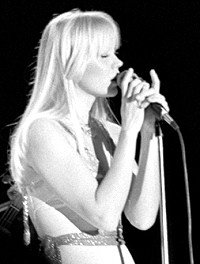
Agnetha Faltskog, dos ABBA, faz hoje 76 anos

quinta-feira, abril 02, 2026
Emmylou Harris celebra hoje 79 anos


segunda-feira, março 30, 2026
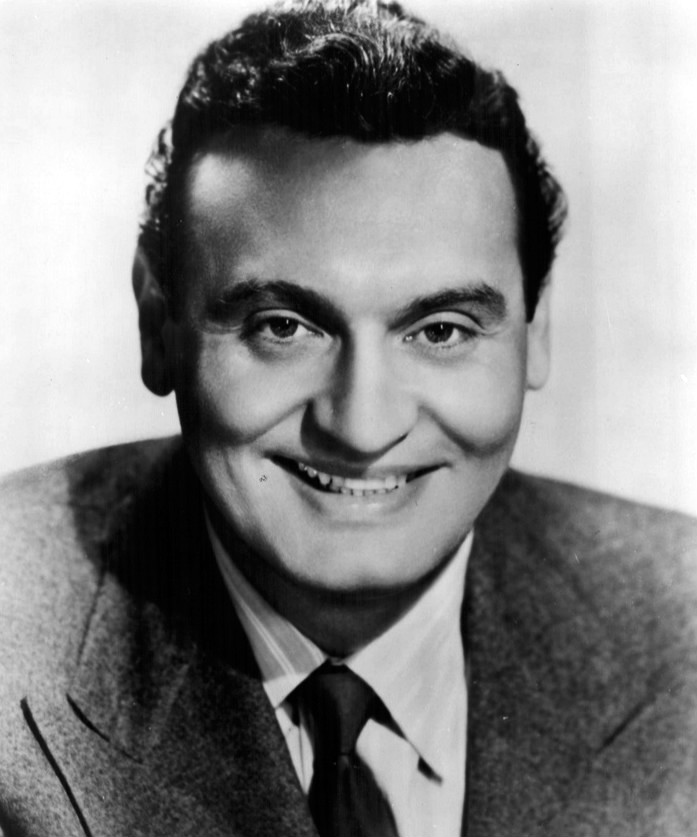
Frankie Laine nasceu há 113 anos...
Tracy Chapman celebra hoje sessenta e dois anos

Carreira
sábado, março 28, 2026
W. C. Handy morreu há 68 anos...

quinta-feira, março 12, 2026
James Taylor celebra hoje 78 anos

James Vernon Taylor (Boston, 12 de março de 1948) é um músico norte-americano, compositor e intérprete da fusão do "country-gospel-rock".

sábado, março 07, 2026
Ali Farka Touré morreu há vinte anos...

Ali Ibrahim Touré, dit Ali Farka Touré, est un musicien et chanteur malien, né le à Kanau et mort le à Bamako. Il est l'une des figures musicales les plus importantes d'Afrique.
Ses compositions sont marquées par une volonté d'associer musique malienne traditionnelle et blues. Martin Scorsese affirme la relation étroite entre les deux genres, considérant la musique de Touré comme étant l'« ADN du blues ». Le genre musical d'Ali Farka Touré s'inscrit dans la longue tradition songhaïe du « wallahidu », un genre musical que l'on retrouve au Sahel. Dans ses morceaux, Touré chante en plusieurs langues africaines, notamment en songhaï, en peul, en touareg et en bambara.
Les trois Grammy Awards qu'il reçoit, le dernier posthume, confirment le succès international de Touré, notamment en Amérique du Nord. Il est classé 71e par Rolling Stone et 37e par Spin dans leur liste des 100 meilleurs guitaristes de tous les temps.
Touré explique lui-même l'origine du nom traditionnel « Farka », signifiant « âne », qui n'a rien de péjoratif car cet animal est admiré pour sa force et sa ténacité : « J'ai perdu neuf frères du même père et de la même mère. Le nom que je porte est Ali Ibrahim. Mais il est une tradition en Afrique de donner un surnom étrange à votre unique enfant si vous avez perdu tous les autres… laissez-moi vous dire clairement une chose, je suis l'âne sur lequel personne ne peut monter. ».
Ali Farka Touré est originaire de Kanau, un village proche du fleuve Niger, à environ 65 km de Tombouctou. Il appartient à une famille noble de l’ethnie Arma, elle-même issue de l’ethnie Songhaï. Son père militaire meurt pendant la II Guerre mondiale. Sa famille s’installe alors à Niafunké (situé 250 km au sud-ouest de Tombouctou). Il ne fréquente pas l’école et passe ses journées à travailler aux champs. Déjà, il s’intéresse à la musique, et plus particulièrement à certains instruments : le gurkel, petite guitare traditionnelle, le njarka, violon populaire, la flûte peul ou le luth ngoni à quatre cordes.
En 1956, il assiste au concert de Fodéba Keïta, musicien guinéen. Parallèlement à sa profession (il est chauffeur), il reprend des airs traditionnels. Il rencontre l’écrivain Amadou Hampâté Bâ avec qui il parcourt le Mali à la découverte des musiques traditionnelles. En 1960, Ali Farka Touré fonde et dirige son premier groupe, La Troupe 117 avec laquelle il parcourt le Mali à travers les festivals. En 1968, il effectue son premier voyage hors d’Afrique pour se rendre au festival international des arts à Sofia (Bulgarie). Il entre en 1970 dans l’orchestre de Radio Mali tout en travaillant comme ingénieur du son dans la même radio. En 1973, l’orchestre est dissous par le gouvernement.
Farka Touré commence alors une carrière solo en donnant des concerts dans toute l’Afrique de l’Ouest. Son premier disque Farka sort en 1976. Dans les années 1980, il effectue plusieurs tournées internationales en Europe, au Japon et aux États-Unis. Après quelques albums à succès, il enregistre en 1991 The Source avec le bluesman Taj Mahal et s’ouvre ainsi à la fusion de la World music. La sortie en 1993 de l’album Talking Timbuktu en duo avec Ry Cooder, le guitariste américain, le propulse sur la scène internationale avec succès : il reçoit un Grammy Award pour cet album.
En 1996, un album en songhaï, en peul et en tamasheq, qu’il intitule Radio Mali est publié. Il réunit des titres sélectionnés parmi de nombreuses bandes enregistrées et diffusées à la radio nationale malienne en 1973-1978. En 1997, Ali Farka Touré annonce qu’il veut se consacrer à l’agriculture dans son village, Niafunké. Son investissement principal est de faire installer des pompes à eau puisant dans le Niger pour l’irrigation des champs alentour. Son investissement pour le développement local fait qu’il est élu maire de la ville de Niafunké sur une liste de l’Union pour la république et la démocratie. En corollaire, il sort l’album intitulé Niafunké, où il aborde à travers les chansons le travail de la terre, l’éducation, la justice et l’apartheid.
En 2005, Ali Farka Touré publie In the Heart of the Moon, avec Toumani Diabaté. Cet album obtient le le Grammy Award du meilleur album traditionnel de musique du monde, offrant ainsi à Ali un deuxième Grammy Award. En , il crée une fondation portant son nom qui a pour but d’organiser un festival biannuel de jazz à Niafunké et créer un centre de formation de jeunes artistes en instruments traditionnels locaux.
Ali Farka Touré décède le , au matin, à Bamako. Il souffrait d’un cancer depuis plusieurs années et était paralysé depuis quelque temps. Il est inhumé à Niafunké. Selon sa maison d’édition, World Circuit, Ali Farka Touré venait de terminer le travail sur un dernier album en solo. Ce sera Savane, album posthume, héritage d’Ali Farka Touré que Ry Cooder qualifie « d’absolument parfait ».
Le , un album enregistré en 2005 par Touré avec Toumani Diabaté, intitulé Ali and Toumani (en) remporte le Grammy Award du « meilleur album de World music traditionnelle » lors de la 53e cérémonie à Los Angeles.
Son fils reprend le flambeau musical : Vieux Farka Touré.
quinta-feira, março 05, 2026
Richard Bell, teclista dos Full Tilt Boogie Band, nasceu há 80 anos...
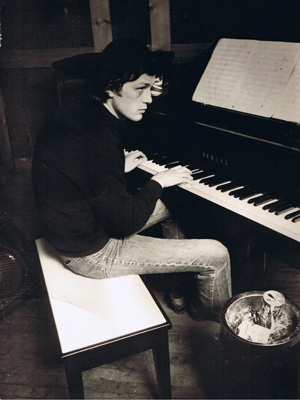
Richard Bell (Toronto, 5 de março de 1946 - Toronto, 15 de junho de 2007) foi um músico canadiano. Ficou conhecido pelos seus desempenhos ao vivo. É, talvez, melhor recordado como o pianista de Janis Joplin e a sua Full Tilt Boogie Band. Foi ainda teclista com The Band durante a década de 90.
in Wikipédia
terça-feira, março 03, 2026
Doc Watson nasceu há cento e três anos...

Jackson C. Frank morreu há vinte e sete anos...

segunda-feira, março 02, 2026
Jackson C. Frank nasceu há 83 anos...
in Wikipedia
quinta-feira, fevereiro 26, 2026
Johnny Cash nasceu há noventa e quatro anos...


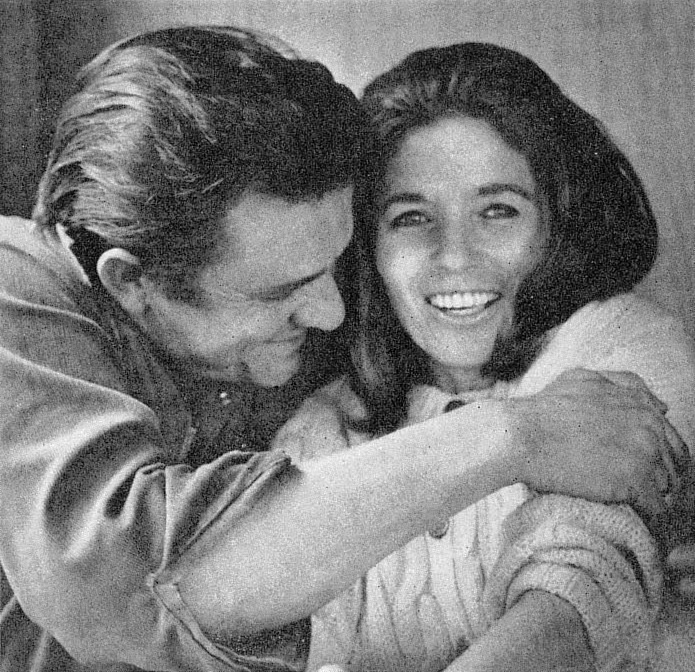
in Wikipédia