sábado, setembro 19, 2026
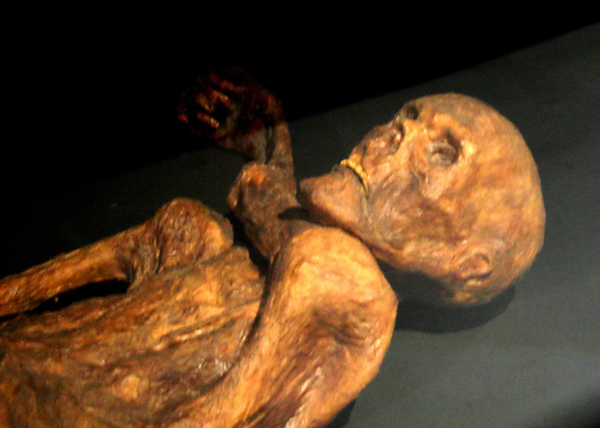
Ötzi, a Múmia do Similaun, foi descoberto há 34 anos
Postado por Fernando Martins às 00:34 0 comentários
Marcadores: Antropologia, Itália, Múmia do Similaun, Ötzi, paleoantropologia
sexta-feira, fevereiro 06, 2026
Mary Leakey nasceu há cento e treze anos...

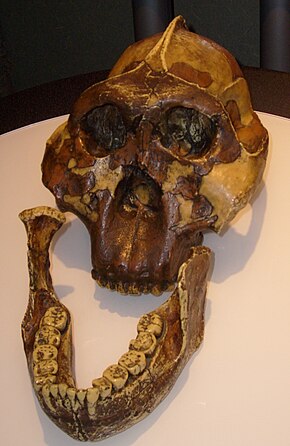
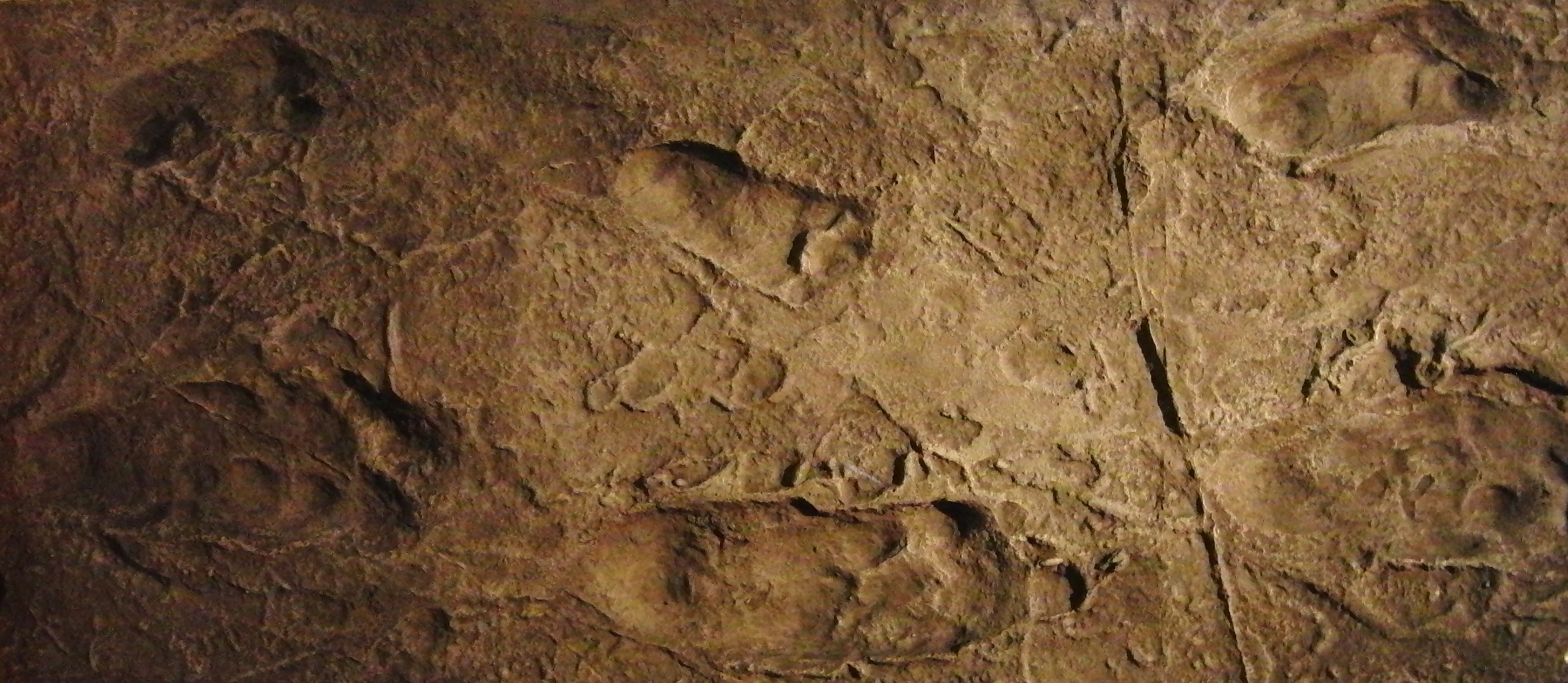
Mary Leakey (London, 6 February 1913 – Nairobi, 9 December 1996) was a British archaeologist and anthropologist, who discovered the first fossilized Proconsul skull, an extinct ape now believed to be ancestral to humans, and also discovered the robust Zinjanthropus skull at Olduvai Gorge. For much of her career she worked together with her husband, Louis Leakey, in Olduvai Gorge, uncovering the tools and fossils of ancient hominines. She developed a system for classifying the stone tools found at Olduvai. She also discovered the Laetoli footprints. In 1960 she became director of excavation at Olduvai and subsequently took it over, building her own staff. After the death of her husband she became a leading palaeoanthropologist, helping to establish the Leakey tradition by training her son, Richard, in the field.
Postado por Fernando Martins às 01:13 0 comentários
Marcadores: Antropologia, Australopithecus, Australopithecus boisei, Louis Leakey, Mary Leakey, paleoantropologia, Paleontologia, pegadas de Laetoli, Proconsul, Richard Leakey, Zinjanthropus
sexta-feira, janeiro 02, 2026
Richard Leakey morreu há quatro anos...
Richard Erskine Frere Leakey (Nairobi, 19 December 1944 – Nairobi, 2 January 2022) was a Kenyan paleoanthropologist, conservationist and politician. Leakey held a number of official positions in Kenya, mostly in institutions of archaeology and wildlife conservation. He was Director of the National Museum of Kenya, founded the NGO WildlifeDirect, and was the chairman of the Kenya Wildlife Service. Leakey served in the powerful office of cabinet secretary and head of public service during the tail end of President Daniel Toroitich Arap Moi's government
Leakey spoke fluent Kiswahili and moved effortlessly between white and black communities. While he rarely talked about race in public, racism and gender inequality infuriated him.
Leakey came from a family of renowned archeologists. His mother, Mary Leakey, discovered evidence in 1978 that man walked upright much earlier than had been thought. She and her husband, Louis Leakey, unearthed skulls of ape-like early humans, shedding fresh light on our ancestors.
Leakey stated that he was an atheist and a humanist. He died at his home outside Nairobi, on 2 January 2022, less than a month after his 77th birthday. In accordance with his wishes, he was buried on a hill along the Rift Valley.Postado por Fernando Martins às 04:00 0 comentários
Marcadores: paleoantropologia, Paleontologia, Quénia, Richard Leakey
quarta-feira, dezembro 24, 2025
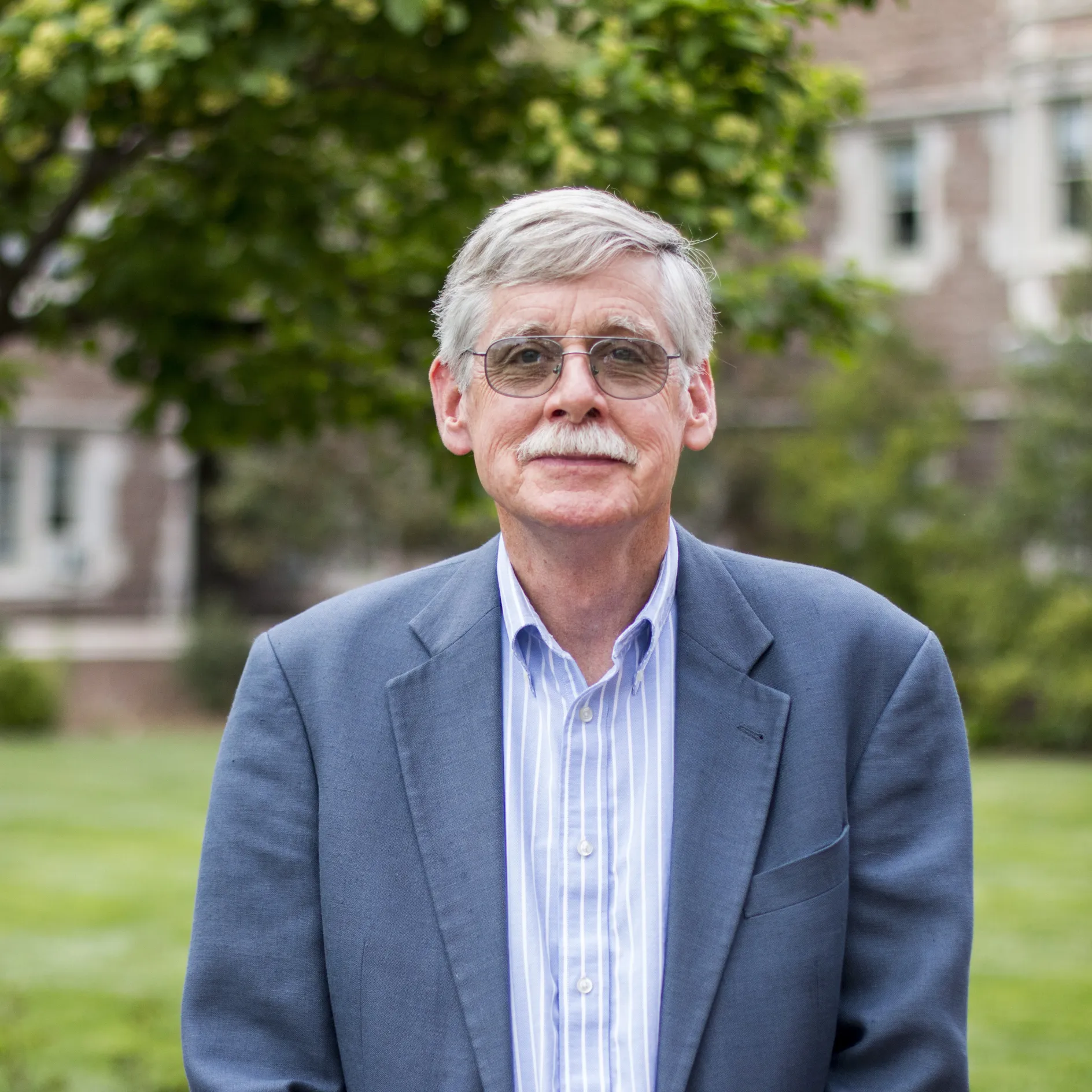
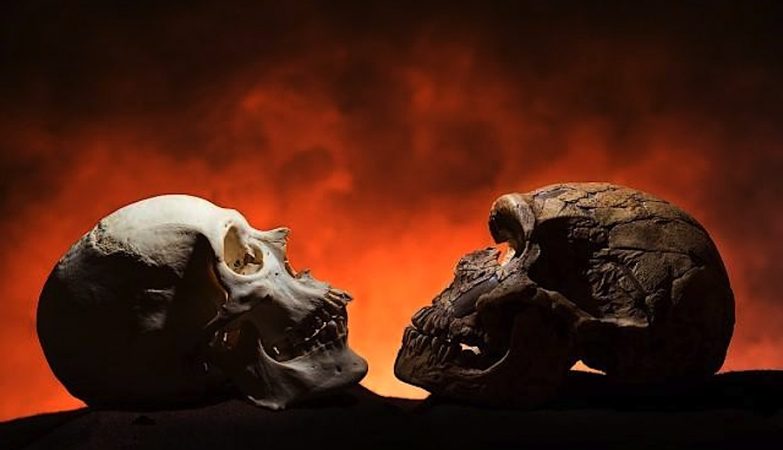
O paleoantropólogo Erik Trinkaus nasceu há 77 anos
(imagem daqui)
Erik Trinkaus (born December 24, 1948) is a paleoanthropologist specializing in Neandertal and early modern human biology and human evolution. Trinkaus researches the evolution of the species Homo sapiens and recent human diversity, focusing on the paleoanthropology and emergence of late archaic and early modern humans, and the subsequent evolution of anatomically modern humanity. Trinkaus is a member of the National Academy of Sciences, and the Mary Tileston Hemenway Professor Emeritus of Arts and Sciences at Washington University in St. Louis. He is a frequent contributor to publications such as Science, Proceedings of the National Academy of Sciences, PLOS One, American Journal of Physical Anthropology, and the Journal of Human Evolution and has written/co-written or edited/co-edited fifteen books in paleoanthropology. He is frequently quoted in the popular media.
Education
Trinkaus received his bachelor of arts degree in Art History from the University of Wisconsin–Madison (1970), and his master's and PhD degrees in Anthropology from the University of Pennsylvania, the latter in 1975.
Scientific views
Trinkaus has been concerned primarily with the biology and behavior of Neandertals and early modern humans through the Middle and Late Pleistocene, in order to shed light on these past humans and to understand the emergence and establishment of modern humans. His work therefore has been primarily concerned with the comparative and functional anatomy, paleopathology, and life history of these past humans. At the same time, because it dominates paleoanthropology, he has been involved in debates concerning the ancestry of modern humans, being one of the first to argue for an African origin of modern humans but with substantial Neandertal ancestry among modern Eurasian human populations.
Although his early work emphasized differences between the Neandertals (and other archaic humans) and early modern humans, his work since the 1990s has documented many similarities across these human groups in terms of function, levels of activity and stress, and abilities to cope socially with the rigors of a Pleistocene foraging existence. His research therefore involves the biomechanical analysis of cranio-facial and post-cranial remains, patterns of tooth wear, interpretations of ecogeographical patterning, life history parameters (growth and mortality), differential levels and patterns of stress (paleopathology), issues of survival, and the interrelationships between these patterns.
Research projects
Trinkaus has conducted a series of comparative analyses, with colleagues and students, on the regional functional anatomy of Neandertals and other Pleistocene humans. He has contributed to the direct radiocarbon dating of original human fossils, and through that work to insights into their diets through the analysis of carbon (C) and nitrogen (N) stable isotopes. He has been involved in the primary paleontological descriptions of a number of Middle and Late Pleistocene human remains, of both archaic and early modern humans. The first project was his monograph on the Shanidar Neandertals from Iraqi Kurdistan. Subsequent major projects concerned with early modern humans include the Abrigo do Lagar Velho (Portugal) Dolní Věstonice and Pavlov Moravia, Czech Republic, Peştera cu Oase (Romania), Peştera Muierii (Romania), Mladeč (Czech Republic), Tianyuandong (China), and Sunghir (Russia). Additional Neandertal descriptions include those from Krapina (Croatia), Oliveira (Portugal), Kiik-Koba (Crimea), and Sima de las Palomas (Spain). To these can be added Middle Pleistocene human remains from Aubesier (France), Broken Hill (Zambia) and Hualongdong (China), plus late archaic humans remains from Xujiayao and Xuchang (China). These paleontological descriptions include both primary data on these fossils and a diversity of paleobiological interpretations of the remains and the Pleistocene human groups from which they derive.
Trinkaus’s analyses of early modern human remains, especially those from Dolní Věstonice, Pavlov, Lagar Velho and Sunghir, have raised a series of questions regarding the nature and diversity of mortuary practices among these early modern humans. And his paleopathological analyses of Pleistocene human remains have raised questions concerning the levels and natures of trauma and developmental abnormalities among these people.
Postado por Fernando Martins às 07:07 0 comentários
Marcadores: Abrigo do Lagar Velho, Antropologia, Menino do Lapedo, neandertais, paleoantropologia
segunda-feira, novembro 24, 2025
O fóssil de Australopithecus afarensis apelidado de Lucy foi descoberto há 51 anos...!
Postado por Fernando Martins às 00:51 0 comentários
Marcadores: Australopithecus afarensis, Lucy, Lucy in the Sky with Diamonds, paleoantropologia, Paleontologia, The Beatles
sexta-feira, setembro 19, 2025
Ötzi, a Múmia do Similaun, foi descoberto há 33 anos
Postado por Fernando Martins às 00:33 0 comentários
Marcadores: Antropologia, Itália, Múmia do Similaun, Ötzi, paleoantropologia
quinta-feira, fevereiro 06, 2025
Mary Leakey nasceu há cento e doze anos...
Mary Leakey (London, 6 February 1913 – Nairobi, 9 December 1996) was a British archaeologist and anthropologist, who discovered the first fossilized Proconsul skull, an extinct ape now believed to be ancestral to humans, and also discovered the robust Zinjanthropus skull at Olduvai Gorge. For much of her career she worked together with her husband, Louis Leakey, in Olduvai Gorge, uncovering the tools and fossils of ancient hominines. She developed a system for classifying the stone tools found at Olduvai. She also discovered the Laetoli footprints. In 1960 she became director of excavation at Olduvai and subsequently took it over, building her own staff. After the death of her husband she became a leading palaeoanthropologist, helping to establish the Leakey tradition by training her son, Richard, in the field.
Postado por Fernando Martins às 01:12 0 comentários
Marcadores: Antropologia, Australopithecus, Australopithecus boisei, Louis Leakey, Mary Leakey, paleoantropologia, Paleontologia, pegadas de Laetoli, Proconsul, Richard Leakey, Zinjanthropus
terça-feira, dezembro 24, 2024
O paleoantropólogo Erik Trinkaus nasceu há 76 anos
Erik Trinkaus (born December 24, 1948) is a paleoanthropologist specializing in Neandertal and early modern human biology and human evolution. Trinkaus researches the evolution of the species Homo sapiens and recent human diversity, focusing on the paleoanthropology and emergence of late archaic and early modern humans, and the subsequent evolution of anatomically modern humanity. Trinkaus is a member of the National Academy of Sciences, and the Mary Tileston Hemenway Professor Emeritus of Arts and Sciences at Washington University in St. Louis. He is a frequent contributor to publications such as Science, Proceedings of the National Academy of Sciences, PLOS One, American Journal of Physical Anthropology, and the Journal of Human Evolution and has written/co-written or edited/co-edited fifteen books in paleoanthropology. He is frequently quoted in the popular media.
Education
Trinkaus received his bachelor of arts degree in Art History from the University of Wisconsin–Madison (1970), and his master's and PhD degrees in Anthropology from the University of Pennsylvania, the latter in 1975.
Scientific views
Trinkaus has been concerned primarily with the biology and behavior of Neandertals and early modern humans through the Middle and Late Pleistocene, in order to shed light on these past humans and to understand the emergence and establishment of modern humans. His work therefore has been primarily concerned with the comparative and functional anatomy, paleopathology, and life history of these past humans. At the same time, because it dominates paleoanthropology, he has been involved in debates concerning the ancestry of modern humans, being one of the first to argue for an African origin of modern humans but with substantial Neandertal ancestry among modern Eurasian human populations.
Although his early work emphasized differences between the Neandertals (and other archaic humans) and early modern humans, his work since the 1990s has documented many similarities across these human groups in terms of function, levels of activity and stress, and abilities to cope socially with the rigors of a Pleistocene foraging existence. His research therefore involves the biomechanical analysis of cranio-facial and post-cranial remains, patterns of tooth wear, interpretations of ecogeographical patterning, life history parameters (growth and mortality), differential levels and patterns of stress (paleopathology), issues of survival, and the interrelationships between these patterns.
Research projects
Trinkaus has conducted a series of comparative analyses, with colleagues and students, on the regional functional anatomy of Neandertals and other Pleistocene humans. He has contributed to the direct radiocarbon dating of original human fossils, and through that work to insights into their diets through the analysis of carbon (C) and nitrogen (N) stable isotopes. He has been involved in the primary paleontological descriptions of a number of Middle and Late Pleistocene human remains, of both archaic and early modern humans. The first project was his monograph on the Shanidar Neandertals from Iraqi Kurdistan. Subsequent major projects concerned with early modern humans include the Abrigo do Lagar Velho (Portugal) Dolní Věstonice and Pavlov Moravia, Czech Republic, Peştera cu Oase (Romania), Peştera Muierii (Romania), Mladeč (Czech Republic), Tianyuandong (China), and Sunghir (Russia). Additional Neandertal descriptions include those from Krapina (Croatia), Oliveira (Portugal), Kiik-Koba (Crimea), and Sima de las Palomas (Spain). To these can be added Middle Pleistocene human remains from Aubesier (France), Broken Hill (Zambia) and Hualongdong (China), plus late archaic humans remains from Xujiayao and Xuchang (China). These paleontological descriptions include both primary data on these fossils and a diversity of paleobiological interpretations of the remains and the Pleistocene human groups from which they derive.
Trinkaus’s analyses of early modern human remains, especially those from Dolní Věstonice, Pavlov, Lagar Velho and Sunghir, have raised a series of questions regarding the nature and diversity of mortuary practices among these early modern humans. And his paleopathological analyses of Pleistocene human remains have raised questions concerning the levels and natures of trauma and developmental abnormalities among these people.
Postado por Fernando Martins às 07:06 0 comentários
Marcadores: Abrigo do Lagar Velho, Antropologia, Menino do Lapedo, neandertais, paleoantropologia
domingo, novembro 24, 2024
A Lucy foi descoberta há cinquenta anos...!
Postado por Fernando Martins às 00:50 0 comentários
Marcadores: Australopithecus afarensis, Lucy, Lucy in the Sky with Diamonds, paleoantropologia, Paleontologia, The Beatles
quinta-feira, setembro 19, 2024
Ötzi, a Múmia do Similaun, foi descoberto há 32 anos
Postado por Fernando Martins às 00:32 0 comentários
Marcadores: Antropologia, Itália, Múmia do Similaun, Ötzi, paleoantropologia
sexta-feira, setembro 06, 2024
Pretensas novidades sobre o local onde apareceram os humanos...
Afinal, o berço da humanidade pode não ser onde pensávamos

Durante décadas, o Rift Africano Oriental tem sido aclamado como o “Berço da Humanidade”, a região onde se acredita que os nossos primeiros antepassados evoluíram.
Esta crença baseia-se em numerosas descobertas de fósseis no Vale do Rift, que forneceram informações valiosas sobre as primeiras fases da evolução humana.
No entanto, um novo estudo, cujos resultados foram publicados em agosto na revista Natura Ecology & Evolution, sugere que esta narrativa pode estar incompleta.
O Rift Africano Oriental, uma formação geológica que se estende por toda a África Oriental, é conhecida pelos seus depósitos de rochas sedimentares que preservaram fósseis antigos durante milhões de anos.
Locais importantes como o desfiladeiro de Olduvai, na Tanzânia, revelaram fósseis dos primeiros hominídeos, como o Paranthropus boisei e o Homo habilis, que datam de há cerca de 2 milhões de anos.
No entanto, este foco no Vale do Rift pode ter levado a uma compreensão distorcida da história inicial da nossa espécie.
“Como as provas da evolução humana inicial provêm de um pequeno número de sítios, é importante reconhecer que não temos uma imagem completa do que aconteceu em todo o continente”, explica W. Andrew Barr, primeiro autor do estudo, em comunicado publicado no EurekAlert.
O Rift Africano Oriental cobre menos de 1% do continente africano, enquanto os primeiros seres humanos provavelmente vagueavam muito para além desta estreita faixa de terra.
A preservação dos fósseis depende fortemente de condições geológicas específicas, e muitas regiões fora do Vale do Rift podem ter sido menos propícias à preservação a longo prazo dos restos mortais dos hominídeos.
Como resultado, grande parte do registo fóssil de outras partes de África provavelmente perdeu-se no tempo.
Num novo estudo, investigadores analisaram as áreas de distribuição dos mamíferos modernos no Vale do Rift e descobriram que, para os animais de médio e grande porte, o Rift Africano Oriental constituía apenas 1,6% do seu habitat. Isto sugere que os primeiros seres humanos, tal como outros animais, não se teriam confinado a esta pequena área.
O estudo também examinou a variação do tamanho do crânio e do corpo dos primatas africanos modernos, revelando que espécies como os babuínos são geralmente maiores na África Central do que na África Oriental.
Se os primeiros hominídeos apresentassem padrões semelhantes de variação morfológica, o registo fóssil do Vale do Rift não captaria esta diversidade, levando a uma imagem incompleta e potencialmente enganadora dos nossos antepassados.
in ZAP
Postado por Fernando Martins às 21:33 0 comentários
Marcadores: África, evolução, Grande Vale do Rift, hominídeos, paleoantropologia, Paleontologia
quarta-feira, maio 29, 2024
Mais novidades sobre hominídeos...
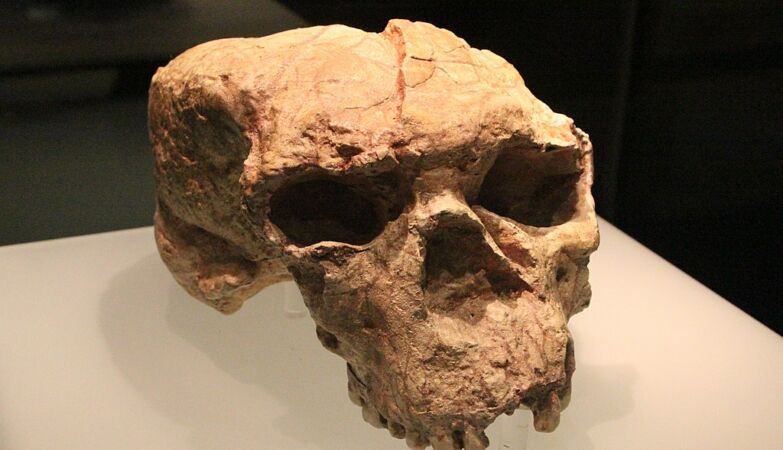
Misterioso crânio com 1 milhão de anos na China pode ser da linhagem do “Homem Dragão”

Uma reconstrução de um dos crânios descobertos em Yunyang sugere que pertencerá ao último antepassado comum entre o Homo sapiens e o Homem-Dragão.
Em 1989 e 1990, dois crânios com cerca de 1 milhão de anos, pertencentes a uma espécie humana desconhecida, foram descobertos no distrito de Yunyang, na província de Hubei, na China Central.
Um terceiro crânio semelhante foi encontrado nas proximidades em 2022, mas a identidade desses fósseis continuou a ser um mistério: seriam Homo erectus ou primeiros Homo sapiens? Ou talvez estivessem relacionados à enigmática linhagem asiática do “Homem-Dragão”?
um novo estudo – que está ainda a ser revisto por pares – cientistas reconstruiram um dos crânios e fizeram a intrigante afirmação de que o indivíduo pode estar próximo do último ancestral comum entre Homo sapiens e a linhagem do Homem-Dragão.
O Homem-Dragão, cientificamente conhecido como Homo longi, é
uma espécie extinta de humano arcaico, conhecida por um crânio com
146.000 anos encontrado na província chinesa de Heilongjiang. Alguns
sugerem que o Homem-Dragão é a mesma espécie dos Denisovanos – a misteriosa “espécie irmã” extinta dos humanos que viveu ao lado do H. sapiens na Eurásia – embora o seu lugar exato na árvore genealógica da humanidade seja incerto.
Curiosamente, parece que o Homem-Dragão pode ter uma relação intrigante com os três crânios encontrados em Yunyang, conhecidos como o “Homem de Yunxian”.
Para chegar a essa conclusão, os investigadores reconstruíram o crânio do Homem de Yunxian, utilizando principalmente o espécime melhor preservado (Yunxian 2). Eles então estudaram a forma do crânio reconstruido para ver como ele se comparava com outros membros da família Homo.
Embora o crânio de Yunxian apresentasse uma mistura de características, muitos aspetos do seu crânio pareciam pertencer a um membro inicial da linhagem do Homem-Dragão, relata o IFLScience.
“Yunxian 2 reconstruido sugere que ele é um membro inicial da linhagem asiática do ‘Homem-Dragão’, que provavelmente inclui os Denisovanos, e é o grupo irmão da linhagem Homo sapiens. Ambas as linhagens, H. sapiens e Homem-Dragão, têm raízes profundas que se estendem além do Pleistoceno Médio, e a posição basal do crânio fóssil de Yunxian sugere que ele representa uma população próxima ao último ancestral comum das duas linhagens,” escrevem os autores do estudo.
Com cerca de 940.000 a 1,1 milhão de anos, o Homem de Yunxian é significativamente mais antigo que a linhagem do Homem-Dragão e H. sapiens. No entanto, a sua datação coincide com o tempo teórico de origem dessas duas linhagens, por volta de 1,13 milhões e 930.000 anos atrás, respetivamente.
Portanto, os investigadores ponderam que o Homem de Yunxian pode ser algo como um último ancestral comum entre a nossa espécie e o chamado Homem-Dragão da Ásia Oriental.
Postado por Fernando Martins às 13:15 0 comentários
Marcadores: China, denisovanos, evolução, Homem de Yunxian, Homem-Dragão, Homo erectus, Homo longi, Homo sapiens, paleoantropologia, Paleontologia