Soviet expansion in 1939–1940
The
Soviet occupation of the Baltic states covers the period from the
Soviet–
Baltic mutual assistance pacts in 1939, to their invasion and
annexation in 1940, to the
mass deportations of 1941.
In September and October 1939 the Soviet government compelled the much
smaller Baltic states to conclude mutual assistance pacts which gave
the Soviets the right to establish
military bases there. Following invasion by the
Red Army in the summer of 1940, Soviet authorities compelled the Baltic governments to resign. The presidents of
Estonia and
Latvia were imprisoned and later died in
Siberia. Under Soviet supervision, new governments of
Communists and
fellow travelers arranged
rigged elections
with falsified results. Shortly thereafter, the Soviet-installed
puppet governments requested admission into the Soviet Union. In June
1941 the new Soviet governments carried out mass deportations of "
enemies of the people". Consequently, at first many Balts greeted the
Germans as liberators when they
occupied the area a week later.
Background
After the
Soviet invasion of Poland
on 17 September 1939, the Soviets pressured Finland and the Baltic
states to conclude mutual assistance treaties. The Soviets questioned
the neutrality of Estonia following the
escape of a Polish submarine from
Tallinn on 18 September. A week after on 24 September, the Estonian foreign minister was given an
ultimatum in Moscow. The Soviets demanded the conclusion of a treaty of mutual assistance to establish military bases in Estonia.
The Estonians had no choice but to allow the establishment of Soviet
naval, air and army bases on two Estonian islands and at the port of
Paldiski.
The corresponding agreement was signed on 28 September 1939. Latvia
followed on 5 October 1939 and Lithuania shortly thereafter, on 10
October 1939. The agreements permitted the Soviet Union to establish
military bases on the Baltic states' territory for the duration of the
European war and station 25,000 Soviet soldiers in
Estonia, 30,000 in
Latvia and 20,000 in
Lithuania from October 1939.
Soviet ultimatums
In 1939
Finland had
rejected similar Soviet demands for military bases on Finnish territory. Consequently, the Soviet Union attacked Finland, starting the
Winter War in November. The war ended in March 1940 with Finnish territorial losses, but Finland kept its
sovereignty. The Baltic states were neutral in the Winter War and the Soviets praised their relations with the USSR as exemplary.
Sovietic military plans
The Soviet troops allocated for possible military actions against the
Baltic states numbered 435,000 troops, around 8,000 guns and mortars,
over 3,000 tanks, and over 500 armoured cars. On June 3, 1940 all Soviet
military forces based in Baltic states were concentrated under the
command of
Aleksandr Loktionov. On June 9 the directive 02622ss/ov was given to the Red Army's
Leningrad Military District by
Semyon Timoshenko to be ready by 12 June to a) capture the vessels of the
Estonian,
Latvian and Lithuanian navies in their bases or at sea; b) capture the
Estonian and Latvian commercial fleets and all other vessels; c)
prepare for an invasion and landing in Tallinn and
Paldiski; d) close the
Gulf of Riga and blockade the coasts of Estonia and Latvia in the
Gulf of Finland and
Baltic Sea;
e) prevent an evacuation of the Estonian and Latvian governments,
military forces and assets; f) provide naval support for an invasion
towards
Rakvere; and g) prevent Estonian and Latvian airplanes from flying either to Finland or Sweden.
On June 12, 1940, according to the director of the Russian State
Archive of the Naval Department Pavel Petrov (C.Phil.) referring to the
records in the archive, the Soviet
Baltic Fleet
was ordered to implement a total military blockade of Estonia. On June
13 at 10:40 AM Soviet forces started to move to their positions and
were ready by June 14 at 10 PM: Four submarines and a number of light
navy units were positioned in the Baltic Sea, in the Gulfs of Riga and
Finland to isolate the Baltic states by the sea; a navy squadron
including three destroyer divisions was positioned to the west of
Naissaar in order to support the invasion; the 1st marine brigade's four battalions were positioned on the transport ships
Sibir,
2nd Pjatiletka and
Elton for landings on the islands Naissaare and
Aegna; the transport ship
Dnester and destroyers
Storozevoi and
Silnoi
were positioned with troops for the invasion of the capital Tallinn;
the 50th battalion was positioned on ships for an invasion near
Kunda.
120 Soviet vessels participated in the naval blockade, including one
cruiser, seven destroyers, and seventeen submarines, along with 219
airplanes including the 8th air-brigade with 84
DB-3 and
Tupolev SB bombers and the 10th brigade with 62 airplanes.
On June 14, 1940, the Soviets
issued an ultimatum to Lithuania. The Soviet military blockade of Estonia went into effect while the world's attention was focused on the fall of
Paris to
Nazi Germany. Two Soviet bombers downed the Finnish passenger airplane "
Kaleva" flying from Tallinn to Helsinki carrying three diplomatic pouches from the U.S. legations in
Tallinn,
Riga and
Helsinki. The US Foreign Service employee
Henry W. Antheil, Jr. was killed in the crash.
Red Army invades
On June 15, the
USSR invaded
Lithuania and
Soviet troops attacked the
Latvia border guards at
Masļenki.
On June 16, 1940, the
USSR invaded
Estonia and
Latvia. According to a
Time magazine article published at the time of the invasions, in a matter of days around 500,000 Soviet
Red Army troops occupied the three
Baltic states - just one week before the
Fall of France to
Nazi Germany.
Molotov
accused the Baltic states of conspiracy against the Soviet Union and
delivered an ultimatum to all Baltic countries for the establishment of
Soviet-approved governments. Threatening invasion and accusing the
three states of violating the original pacts as well as forming a
conspiracy against the Soviet Union, Moscow presented ultimatums,
demanding new concessions, which included the replacement of their
governments and allowing an unlimited number of troops to enter the
three countries. Hundreds of thousands Soviet troops entered Estonia,
Latvia, Lithuania. These additional Soviet military forces far
outnumbered the armies of each country.
The Baltic governments had decided that, given their international
isolation and the overwhelming Soviet forces on their borders and
already on their territories, it was futile to actively resist and
better to avoid bloodshed in an unwinnable war. The occupation of the Baltic states coincided with a communist
coup d'état in each country, supported by the Soviet troops.
Most of the
Estonian Defence Forces and the
Estonian Defence Leaguesurrendered
according to the orders of the Estonian Government and were disarmed by
the Red Army.
Only the Estonian Independent Signal Battalion stationed in Tallinn at
Raua Street showed resistance to the Red Army and "People's
Self-Defence" Communist militia, fighting the invading troops on 21 June
1940. As the Red Army brought in additional reinforcements supported by
six
armoured fighting vehicles, the battle lasted several hours until sundown. Finally the military resistance was ended with
negotiations and the Independent Signal Battalion surrendered and was disarmed.
There were two dead Estonian servicemen, Aleksei Männikus and Johannes
Mandre, and several wounded on the Estonian side and about ten killed
and more wounded on the Soviet side. The Soviet militia that participated in the battle was led by
Nikolai Stepulov.
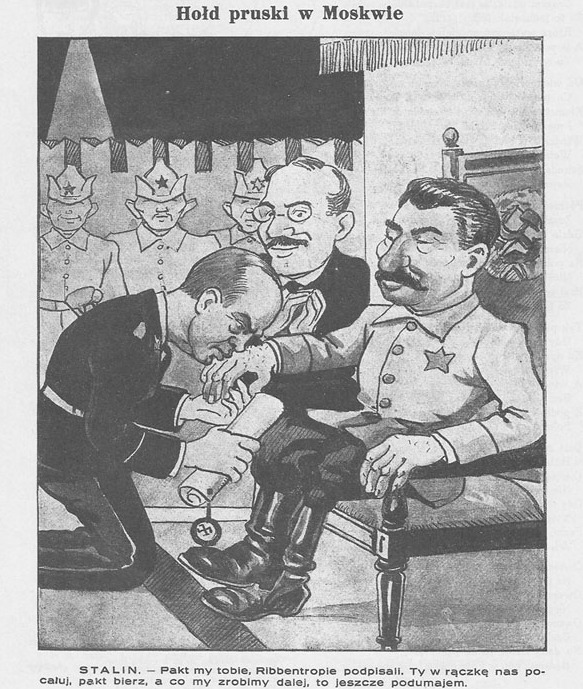
Winston Churchill, First Lord of the Admiralty at the time, said in his
1939 radio broadcast: that the Russian armies should stand on this line
was clearly
necessary for the safety of Russia against the Nazi menace. At any
rate, the line is there, and an Eastern front has been created which
Nazi Germany does not dare assail. When Herr von Ribbentrop was
summoned to Moscow last week it was to learn the fact, and to accept
the fact, that the Nazi designs upon the Baltic States and upon the
Ukraine must come to a dead stop.
Sovietization of the Baltic states
Political repressions followed with
mass deportations carried out by the Soviets. The
Serov Instructions,
"On the Procedure for carrying out the Deportation of Anti-Soviet Elements from Lithuania, Latvia, and Estonia", contained detailed procedures and protocols to observe in the deportation of Baltic nationals.
The Soviets began a constitutional metamorphosis of the Baltic states by
first forming transitional "People's Governments." Led by Stalin’s
close associates,
and local communist supporters as well as official brought in from the
Soviet Union, they forced the presidents and governments of all three
countries to resign, replacing them with the provisional People's
Governments.
On July 14–15, following illegal amendments to the electoral laws of
the respective states, rigged parliamentary elections for the "
People's Parliaments"
were conducted by local Communists loyal to the Soviet Union. Because
of new election restrictions in the amended electoral laws, only the
Communists and their allies were effectively allowed to run.
The election results were completely fabricated: the Soviet press
service released them early, with the result that they had already
appeared in print in a
London newspaper a full 24 hours before the polls closed.
The new Soviet-installed governments in the Baltic states began to align their policies with current Soviet practices.
According to the prevailing doctrine in the process, the old
"bourgeois" societies were destroyed so that new socialist societies,
run by loyal Soviet citizens, could be constructed in their place.






.svg)