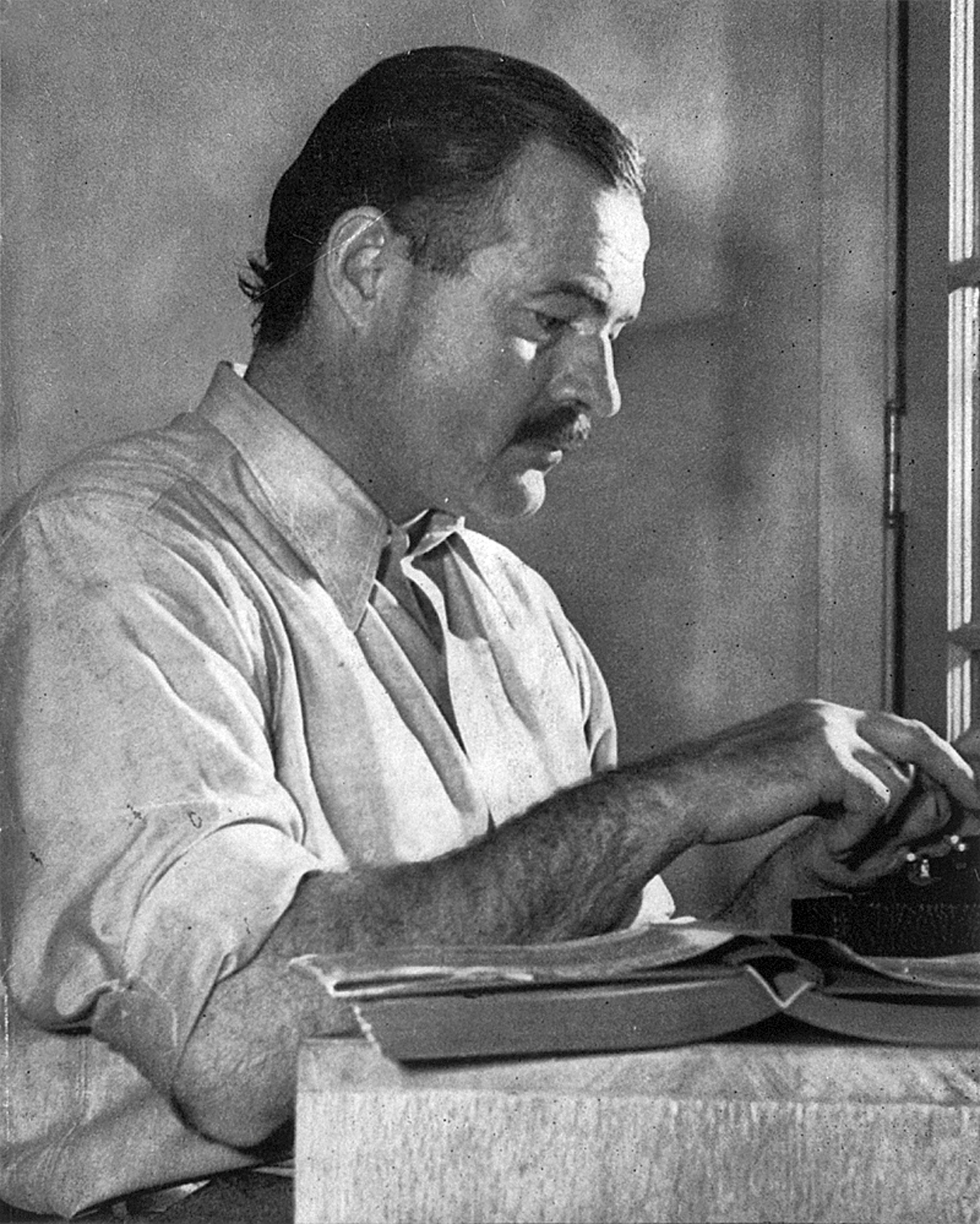
Ernest Miller Hemingway (Oak Park, 21 de julho de 1899 - Ketchum, 2 de julho de 1961) foi um escritor norte-americano.
Trabalhou como correspondente de guerra em Madrid durante a Guerra Civil Espanhola e a experiência inspirou uma de suas maiores obras, Por Quem os Sinos Dobram. No fim da Segunda Guerra Mundial instalou-se em Cuba.
Hemingway era parte da comunidade de escritores expatriados em Paris, conhecida como "geração perdida", nome inventado e popularizado por Gertrude Stein. Levando uma vida turbulenta, Hemingway casou-se quatro vezes, além de ter tido vários relacionamentos românticos. Em 1952 publica "O Velho e o Mar", com o qual ganhou o prémio Pulitzer (1953), considerada a sua obra-prima. Hemingway recebeu o Nobel de Literatura de 1954.
A vida e a obra de Hemingway tem intensa relação com a Espanha,
país onde viveu por quatro anos. Uma breve passagem, mas marcante para
um escritor norte-americano que estabeleceu uma relação emotiva e ideológica
com os espanhóis. Em Pamplona, meados do século XX, fascinado pelas touradas, a ponto de tornar-se um toureiro amador, transporta essa experiência para dois livros: O Sol Também Se Levanta (1926) e Por Quem os Sinos Dobram (1940). Ao cobrir a Guerra Civil (1937) - como jornalista do North American Newspaper Alliance, não hesitou em se juntar às forças republicanas contra o fascismo.
Ainda muito jovem, decidiu ir à Europa pela primeira vez, quando a Grande Guerra assombrava o mundo (1918). Hemingway havia terminado o segundo grau em Oak Park e trabalhado como jornalista no Kansas City Star.
Tentou alistar-se, mas foi preterido por ter um problema na visão.
Decidido a ir à guerra, conseguiu uma vaga de motorista de ambulância na
Cruz Vermelha. Na Itália, apaixonou-se pela enfermeira Agnes Von Kurowsky, sua inspiração na criação da heroína de Adeus às armas
(1929) – a inglesa Catherine Barkley. Atingido por uma bomba, retornou
para Oak Park que, depois do que viu na Itália, tornou-se monótona
demais
Volta à Europa (Paris), em 1921, recém-casado com Elizabeth Richardson, o seu primeiro casamento, com quem teve um filho. Na ocasião, trabalhava para o Toronto Star Weeky e, no início de carreira, aproximou-se de outros principiantes: Ezra Pound (1885 – 1972), Scott Fitzgerald (1896 – 1940) e Gertrude Stein (1874 – 1940).
O seu segundo casamento (1927) foi com a jornalista de moda Pauline Pfeiffer e com ela teve dois filhos. Em 1928, o casal decidiu morar em Key West, na Flórida.
O escritor sentiu falta da vida de jornalista e correspondente
internacional. O casamento com Pauline era instável. Nessa época conhece
Joe Russell, dono do Sloppy Joe’s Bar e companheiro de farra. Já na década de 30, resolveu partir com o amigo para uma pescaria. Dois dias no alto-mar que terminaram em Havana, capital cubana, para onde voltava anualmente na época da corrida do espadarte (entre os meses de maio e julho). Hospedava-se no hotel Ambos Mundos, em plena Habana Vieja,
bairro mais antigo da cidade que se tornava o lar do escritor, e os
cenários que comporiam sua história e a da própria ilha pelos próximos
23 anos. Duas décadas de turbulências que teriam como desfecho a
revolução socialista e o suicídio do escritor.
Em Cuba, o escritor apaixonou-se por Jane Mason, casada com o diretor de operações da Pan American Airways e tornaram-se amantes. Em 1936, apaixona-se novamente, desta feita pela destemida jornalista Martha Gellhorn, motivo do segundo divórcio, confirmando o que predisse seu amigo, Scott Fitzgerald, quando eles se conheceram em Paris: “Você vai precisar de uma mulher a cada livro”. Assim, Hemingway partiu para a Espanha, onde Martha já estava e, no meio da guerra civil, os dois viveram um romance que resultou no seu terceiro casamento. Quando a república caiu e a Europa vivia o prenúncio de um conflito generalizado, Hemingway retornou para Cuba, com Martha.
Em 1946, o escritor casa-se pela quarta e última vez com Mary Welsh, também jornalista, mas tímida e disposta a viver ao lado de um Hemingway cada vez mais instável emocionalmente.
Em Cuba, o escritor apaixonou-se por Jane Mason, casada com o diretor de operações da Pan American Airways e tornaram-se amantes. Em 1936, apaixona-se novamente, desta feita pela destemida jornalista Martha Gellhorn, motivo do segundo divórcio, confirmando o que predisse seu amigo, Scott Fitzgerald, quando eles se conheceram em Paris: “Você vai precisar de uma mulher a cada livro”. Assim, Hemingway partiu para a Espanha, onde Martha já estava e, no meio da guerra civil, os dois viveram um romance que resultou no seu terceiro casamento. Quando a república caiu e a Europa vivia o prenúncio de um conflito generalizado, Hemingway retornou para Cuba, com Martha.
Em 1946, o escritor casa-se pela quarta e última vez com Mary Welsh, também jornalista, mas tímida e disposta a viver ao lado de um Hemingway cada vez mais instável emocionalmente.
Ao longo da vida do escritor, o tema suicídio
aparece em escritos, cartas e conversas com muita frequência. Seu pai
suicidou-se em 1929 por problemas de saúde e financeiros. A sua mãe,
Grace, dona de casa e professora de canto e ópera, atormentava-o com a
sua personalidade dominadora. Ela enviou-lhe pelo correio a pistola com a
qual o seu pai havia se matado. O escritor, atónito, não sabia se ela
queria que ele repetisse o ato do pai ou que guardasse a arma como
lembrança.
Aos 61 anos e enfrentando problemas de hipertensão, diabetes, aterosclerose, depressão e perda de memória, Hemingway decidiu-se pela primeira alternativa.
Todas as personagens deste escritor se defrontaram com o problema da "evidência trágica" do fim. Hemingway não pôde aceitá-la. A vida inteira jogou com a morte, até que, na manhã de 2 de julho de 1961, em Ketchum, Idaho, tomou uma arma de caça e disparou contra si mesmo.
Aos 61 anos e enfrentando problemas de hipertensão, diabetes, aterosclerose, depressão e perda de memória, Hemingway decidiu-se pela primeira alternativa.
Todas as personagens deste escritor se defrontaram com o problema da "evidência trágica" do fim. Hemingway não pôde aceitá-la. A vida inteira jogou com a morte, até que, na manhã de 2 de julho de 1961, em Ketchum, Idaho, tomou uma arma de caça e disparou contra si mesmo.

in Wikipédia