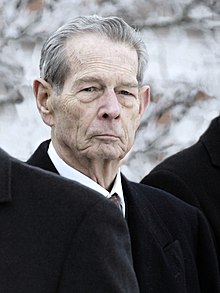
Miguel I (em romeno: Mihai I; Sinaia, 25 de outubro de 1921 - Aubonne, 5 de dezembro de 2017) foi rei da Roménia
em dois períodos diferentes, primeiro entre 1927 e 1930 e, depois, de
1940 até à sua abdicação forçada, em 1947. Foi o único filho do rei Carlos II e da sua esposa, a princesa Helena da Grécia e Dinamarca.

in Wikipédia
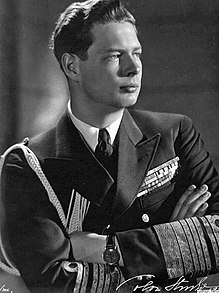
In November, 1947 King Michael traveled to London for the wedding of his cousins, the Princess Elizabeth (the future Queen Elizabeth II) and Philip Mountbatten, an occasion during which he met Princess Anne of Bourbon-Parma
(his second cousin once removed), who was to become his wife. According
to unconfirmed claims by so-called Romanian 'royalists', King Michael
did not want to return home, but certain Americans and Britons present
at the wedding encouraged him to do so; Winston Churchill
is said to have counseled Michael to return because "above all things, a
King must be courageous." According to his own account, King Michael rejected any offers of asylum and decided to return to Romania, contrary to the confidential, strong advice of the British Ambassador to Romania.
On 30 December 1947 the royal palace was surrounded by the Tudor Vladimirescu army units loyal to the Communists. Michael was forced at gun point (by either Petru Groza or Gheorghe Gheorghiu-Dej, depending on the source) to abdicate Romania's throne.
Later the same day, the Communist-dominated government announced the
'permanent' abolition of the monarchy and its replacement by a People's Republic, broadcasting the King's pre-recorded radio proclamation of his own abdication. On 3 January 1948, Michael was forced to leave the country, followed over a week later by Princesses Elisabeth and Ileana, who collaborated so closely with the Soviets they became known as the King's "Red Aunts."
According to Michael's own account, the Communist Prime Minister Petru Groza had threatened him at gun point and warned that the government would shoot 1,000 arrested students if the king didn't abdicate. In an interview with The New York Times
from 2007, Michael recalls the events: “It was blackmail. They said,
‘If you don’t sign this immediately we are obliged’ — why obliged I
don’t know — 'to kill more than 1,000 students' that they had in
prison.” According to Time magazine,
the communist government threatened Michael that it would arrest
thousands and steep the country in blood if he did not abdicate.
According to the Albanian communist leader Enver Hoxha,
who recounts his conversations with the Romanian Communist leaders on
the monarch's abdication, King Michael was threatened with a pistol by
the Romanian Communist Party leader Gheorghe Gheorghiu-Dej rather than Petru Groza so as to abdicate.
in Wikipedia